

-
1 innombrable
countless, innumerable, numberless, without number -
2 passer
passer [pαse]━━━━━━━━━━━━━━━━━━➭ TABLE 1━━━━━━━━━━━━━━━━━━━━━━━━━━━━━━━━━━► Lorsque passer fait partie d'une locution comme passer sous le nez de qn, reportez-vous à l'autre mot.━━━━━━━━━━━━━━━━━1. <• où passe la route ? where does the road go?► passer à ( = passer par, aller à)• si nous passions au salon ? shall we go into the sitting room?• le confort, ça passe après comfort is less important► passer avant• passez donc devant ! you go first!• il est passé devant le conseil de discipline he came up before the disciplinary committee► passer par to go through• pour y aller, je passe par Amiens I go there via Amiens• par où êtes-vous passé ? (pour venir ici) which way did you come? ; (pour aller ailleurs) which way did you go?• pour téléphoner, il faut passer par le standard you have to go through the switchboard to make a call• ça fait du bien par où ça passe ! (inf) that's just what the doctor ordered! (inf)► passer sous to go under• l'air passe sous la porte there's a draught from under the door► passer sur to go over ; ( = ignorer) to ignore• et je passe sur la saleté du lieu ! not to mention how dirty the place was!► laisser passer [+ air, lumière] to let in ; [+ personne, procession] to let through ; [+ erreur, occasion] to missb. ( = faire une halte rapide) passer au bureau to call in at the office► passer + infinitif• puis-je passer te voir en vitesse ? can I pop round?► en passant ( = sur le chemin) on the way ; ( = dans la conversation) in passing• il aime tous les sports, du football à la boxe en passant par le golf he likes all sports, from football to golf to boxingd. ( = franchir un obstacle) [véhicule] to get through ; [cheval, sauteur] to get over• ça passe ? (en manœuvrant) have I got enough room?e. ( = s'écouler) [temps] to go by• comme le temps passe ! how time flies!f. ( = être digéré) to go down• ça ne passe pas [repas] I've got indigestiong. ( = être accepté) [demande, proposition] to be accepted• il est passé dans la classe supérieure he's moved up to the next class (Brit) he's been promoted to the next grade (US)• l'équipe est passée en 2e division the team have moved up to the second divisionh. ( = devenir) to becomei. ( = être montré) [film, émission, personne] to be onj. ( = disparaître) [douleur] to pass ; [orage] to blow over ; [beauté, couleur] to fade ; [colère] to subside ; [mode] to die outl. (locutions) qu'il soit menteur, passe encore,... he may be a liar, that's one thing,...• se faire passer pour to pass o.s. off ason a eu la grippe, tout le monde y est passé we've all had flu• si elle veut une promotion, il faudra bien qu'elle y passe (sexuellement) if she wants to be promoted, she'll have to sleep with the boss► passons let's say no more about it2. <a. ( = franchir) [+ frontière] to cross ; [+ porte] to go throughb. ( = donner, transmettre) to give ; [+ consigne, message] to pass on• je vous passe M. Duroy [standard] I'm putting you through to Mr Duroy ; ( = je lui passe l'appareil) here's Mr Duroyc. ( = mettre) [+ vêtement] to put ond. ( = dépasser) [+ gare, maison] to passe. ( = omettre) [+ mot, ligne] to leave out• et j'en passe ! and that's not all!f. ( = permettre) passer un caprice à qn to humour sbg. [+ examen] to takeh. [+ temps, vacances] to spendi. [+ film, diapositives] to show ; [+ disque] to playj. [+ commande] to place3. <a. ( = avoir lieu) to happen• qu'est-ce qui s'est passé ? what happened?• que se passe-t-il ? what's going on?• ça ne se passera pas comme ça ! I won't stand for that!b. ( = se mettre à soi-même) elle s'est passé de la crème solaire sur les épaules she put some sun cream on her shouldersc. (se transmettre) [+ ballon] to pass to each other ; [+ notes de cours, livre, plat] to pass around━━━━━━━━━━━━━━━━━+1! La traduction la plus courante de passer n'est pas to pass ; passer un examen se traduit par to take an exam.* * *pɑse
1.
1) ( franchir) to cross [fleuve, frontière]; to go through [porte, douane]; to get over [obstacle]2) ( faire franchir)3) ( dépasser) to go past, to passquand vous aurez passé le feu, tournez à droite — turn right after the lights
4) ( mettre)5) ( transmettre) to pass [objet] (à to); to pass [something] on [consigne, maladie] (à to); ( prêter) (colloq) to lend ( à quelqu'un to somebody); ( donner) (colloq) to give ( à quelqu'un to somebody)6) ( au téléphone)attends, je te la passe — hold on, here she is, I'll put her on
je vous le passe — ( sur un autre poste) I'm putting you through
7) ( se présenter à) to take, to sit [examen scolaire, test]; to have [visite médicale, entretien]c'est moi qui fais passer l'oral de français aux nouveaux — I'm taking the new pupils for the French oral
8) ( réussir) to pass [examen, test]9) ( dans le temps) to spend [temps] ( à faire doing)dépêche-toi, on ne va pas y passer la nuit! — (colloq) hurry up, or we'll be here all night!
10) ( pardonner)11) ( omettre) to skip [mot, page, paragraphe]j'en passe et des meilleures — (colloq) ( après énumération) and so on and so forth, I could go on
12) ( utiliser)passer l'aspirateur dans le salon — to hoover® GB ou vacuum the lounge
13) ( étendre)14) ( soumettre)qu'est-ce qu'elle nous a passé! — (colloq) she really went for us! (colloq)
15) ( à travers une grille) to filter [café]; to strain [jus, sauce]; to purée [légumes]16) ( enfiler) to slip [something] on [vêtement, anneau]; to slip into [robe]17) ( faire jouer) to play [disque, cassette audio]; ( projeter) to show [film, diapositives, cassette vidéo]; ( diffuser) to place [annonce]18) ( signer) to sign [contrat]; to enter into [accord]; to place [commande]; to pass [loi, décret]passer un marché — (colloq) to make a deal
19) Automobile ( enclencher)passer la troisième/la marche arrière — to go into third gear/into reverse
20) Jeux
2.
verbe intransitif1) ( parcourir son chemin) [personne, animal, véhicule, ballon] to go past ou by, to passle facteur n'est pas encore passé — the postman hasn't come ou been yet
passer à pied/à bicyclette — to walk/to cycle past
2) (se trouver, s'étendre)ligne qui passe par les centres de deux cercles — line that goes through the centres [BrE] of two circles
3) ( faire un saut)je ne fais que passer — I've just popped in GB ou dropped by for a minute
passer dans la matinée — to call in the morning GB, to come over in the morning
passer prendre quelqu'un/qch — to pick somebody/sth up
4) ( se rendre) to goil est passé devant moi — ( dans une queue) he pushed in front of me
5) ( aller au-delà) to get throughvas-y, ça passe! — go on, there's plenty of room!
il est passé par la fenêtre — ( par accident) he fell out of the window; ( pour entrer) he got in through the window
passer derrière la maison — to get round GB ou around US the back of the house
6) ( transiter)passer par — [personne] lit to pass ou go through; fig to go through
qu'est-ce qui lui est passé par la tête? — what was he/she thinking of?
un sourire passa sur ses lèvres — he/she smiled briefly
des reptiles à l'homme, en passant par le singe — from reptiles to man, including apes
7) (colloq) ( avoir son tour)il accuse le patron, ses collègues, bref, tout le monde y passe — he's accusing the boss, his colleagues - in other words, everyone in sight
que ça te plaise ou non, il va falloir y passer — whether you like it or not, there's no alternative
je sais, j'en suis déjà passé par là — I know all about that, I've been there (colloq)
8) ( négliger)passons! — ( injonction) let's hear no more about it!
passer à côté d'une question — ( involontairement) to miss the point
laisser passer quelque chose — ( délibérément) to overlook something
laisser passer plusieurs fautes — ( par inadvertance) to let several mistakes slip through
9) ( ne pas approfondir)10) (être admis, supporté) [aliment, repas] to go down; [commentaires, discours, critiques] to go down well ( auprès de with); [loi, candidat] to get through; [attitude, pensée] to be acceptedprends un peu de cognac, ça fait passer! — have a drop of brandy, it's good for the digestion
que je sois critiqué, passe encore, mais calomnié, non! — criticism is one thing, but I draw the line at slander
avec lui, la flatterie, ça ne passe pas — flattery won't work with him
passer au premier tour — Politique to be elected in the first round
passer dans la classe supérieure — to move up to the next year ou grade US
(ça) passe pour cette fois — (colloq) I'll let it go this time
11) ( se déplacer)12) ( être pris)faire passer quelqu'un/qch pour exceptionnel — to make somebody/sth out to be exceptional
13) ( disparaître) [douleur, événement] to passquand l'orage sera or aura passé — lit when the storm is over; fig when the storm dies down
ça passera — ( sa mauvaise humeur) it'll pass; ( ton chagrin) you'll get over it
la première réaction passée — once we/they calmed down
nous avons dû attendre que sa colère soit passée — we had to wait for his/her anger to subside
14) (apparaître, être projeté, diffusé) [artiste, groupe] ( sur une scène) to be appearing; (à la télévision, radio) to be on; [spectacle, film] to be on; [cassette, musique] to be playing15) ( être placé)passer avant/après — ( en importance) to come before/after
16) (colloq) ( disparaître)17) ( s'écouler) [temps] to pass, to go by18) ( se mettre à) to turn to19) ( être transmis)20) ( être promu) to be promoted to21) ( être dépensé) [argent, somme] to go on ou in ou into; [produit, matière] to go into22) (colloq) ( mourir)si tu continues à conduire comme ça, tu vas finir par y passer — if you keep driving like that, you'll kill yourself
on y passera tous, mais le plus tard sera le mieux — we've all got to go sometime, the later the better
23) ( se décolorer) [teinte, tissu] to fade24) ( filtrer) [café] to filter25) ( changer de vitesse)passer en troisième/marche arrière — to go into third/reverse
la troisième passe mal or a du mal à passer — third gear is a bit stiff
26) Jeux (au bridge, poker) to pass
3.
se passer verbe pronominal1) ( se produire) to happen2) ( être situé) to take place3) ( se dérouler) [opération, examen, négociations] to go4) ( s'écouler) [période] to go by, to pass5) ( se dispenser)se passer de — [personne] to do without [objet, activité, personne]; to go without [repas, nourriture, sommeil]
6) ( se mettre)7) ( l'un à l'autre)* * *pɒse1. vi1) (= aller) to go, to pass, to pass by, to go byIls sont passés par Paris. — They went through Paris.
2) (= faire une halte rapide) [facteur] to come, to call, (pour rendre visite) to call in, to drop inJe passerai chez vous ce soir. — I'll call in this evening., I'll drop in this evening.
Je lui ai dit en passant que j'allais me marier. — I told him in passing that I was getting married.
3) CARTES to pass4)passe encore de le penser, mais de le dire! — it's one thing to think it, but to say it!
passer sur qch [faute, détail inutile] — to pass over sth
5) (= s'écouler) [temps, jours] to go by, to pass6) (= disparaître) [douleur] to pass, to go away, [mode] to die out, [couleur, papier] to fadefaire passer à qn le goût de qch [homme] — to cure sb of his taste for sth, [femme] to cure sb of her taste for sth
7) (= franchir un obstacle, traverser) [personne] to get through, [courant, air, lumière] to get through, [liquide, café] to go throughfaire passer [message] — to get over, to get across
laisser passer [air, lumière, personne] — to let through, [occasion] to miss, [erreur] to overlook
Il m'a laissé passer. — He let me through.
8) (= être digéré, avalé) to go down10) (= être diffusé) [film, émission] to be on"Titanic" passe à la télé ce soir. — "Titanic" is on TV tonight.
Mon père passe à la radio demain soir. — My father's on the radio tomorrow night.
passer à [ennemi, opposition] — to go over to
passer aux aveux — to confess, to make a confession
passer avant qch/qn fig — to come before sth/sb
passer en seconde AUTOMOBILES — to change into second
passer pour; Il passe pour riche. — He is thought to be rich.
faire passer qn/qch pour — to make sb/sth out to be
2. vt1) (= franchir) [frontière, rivière] to cross, [douane] to go throughNous avons passé la frontière belge. — We crossed the Belgian border.
2) (= transmettre, donner)passer qch à qn — to pass sth to sb, to give sb sth
Passe-moi le sel, s'il te plaît. — Pass me the salt, please.
je vous passe M. Cousin (au téléphone) — I'm putting you through to Mr Cousin
passer qch en fraude (= faire entrer) — to smuggle sth in, (= faire sortir) to smuggle sth out
3) [temps, journée] to spendElle a passé la journée à ne rien faire. — She spent the day doing nothing.
Ils passent toujours leurs vacances au Danemark. — They always spend their holidays in Denmark.
4) (= subir) [examen] to sit, to take, [visite médicale] to haveGordon a passé ses examens la semaine dernière. — Gordon took his exams last week.
5) (= mettre) [vêtement] to slip onpasser la seconde AUTOMOBILES — to change into second
6) (= faire passer) [thé, soupe] to strain7) (= jouer) [film] to show, [disque, CD] to play, to put onOn passe "Le Kid" au cinéma cette semaine. — They're showing "The Kid" at the cinema this week.
8) (= conclure) [marché] to agree on, [accord] to reach9) (= tolérer)10) (= devenir)* * *passer verb table: aimerA vtr1 ( franchir) to cross [fleuve, pont, frontière, col]; to go through [porte, douane]; to get over [haie, obstacle]; ils ont fait passer la rivière au troupeau they took the herd across the river; il m'a fait passer la frontière he got me across the border;2 ( faire franchir) passer qch à la douane to get sth through customs; passer qch en fraude or contrebande to smuggle sth; passer qn en fraude ( vers l'intérieur) to smuggle sb in; ( vers l'extérieur) to smuggle sb out; ⇒ gauche;3 ( dépasser) to go past, to pass; quand vous aurez passé le feu, tournez à droite turn right after the lights; passer la barre des dix euros to pass the ten-euro mark; on a passé l'heure it's too late; j'ai passé l'âge I'm too old; le malade ne passera pas la nuit the patient won't last the night;4 ( mettre) passer le doigt sur la table to run one's finger over the table-top; passer la tête à la fenêtre to stick one's head out of the window; elle m'a passé le bras autour des épaules she put her arm around my shoulders; elle m'a passé la main dans les cheveux she ran her fingers through my hair;5 ( transmettre) to pass [objet] (à to); to pass [sth] on [consigne, maladie] (à to); ( prêter)○ to lend (à qn to sb); ( donner)○ to give (à qn to sb); passer le ballon au gardien de but to pass the ball to the goalkeeper; passe-moi le sel pass me the salt; passe le vin à ton père pass your father the wine; faites passer le plat entre vous pass the dish around; fais passer la bonne nouvelle à tes amis pass the good news on to your friends; elle a attrapé la grippe et l'a passée à son mari she caught flu and gave it to her husband; il m'a passé son vélo○ ( prêté) he lent me his bike; ( donné) he gave me his bike; il m'a passé son rhume he's given me his cold;6 ( au téléphone) tu peux me passer Chris? can you put Chris on?; attends, je te la passe hold on, here she is, I'll put her on; je vous le passe ( sur un autre poste) I'm putting you through; pourriez-vous me passer le poste 4834/le service de traduction? could you put me through to extension 4834/the translation department, please?; il est sorti, je vous passe sa secrétaire he's out, I'll put you through to his secretary;7 ( se présenter à) to take, to sit [examen scolaire, test]; to have [visite médicale, entretien]; passer son permis de conduire to take one's driving test; faire passer un test à qn to give sb a test; c'est moi qui fais passer l'oral de français aux nouveaux I'm taking the new pupils for the French oral;8 ( réussir) to pass [examen, test];9 ( dans le temps) to spend [temps, jour, vie, vacances] (à faire doing); passer une nuit à l'hôtel to spend a night at a hotel; nous avons passé de bons moments ensemble we've had some good times together; dépêche-toi, on ne va pas y passer la nuit○! hurry up, or we'll be here all night!; passer sa colère sur son chat/ses collègues to take one's anger out on the cat/one's colleagues;10 ( pardonner) passer qch à qn to let sb get away with sth; il ne me passe rien he doesn't let me get away with anything; elle leur passe tout she lets them get away with murder; passez-lui ses écarts de langage excuse his/her strong language; il passe tous ses caprices à sa fille he indulges his daughter's every whim; passez-moi l'expression/le terme if you'll pardon the expression/the word;11 ( omettre) to skip [mot, page, paragraphe]; je vous passe les détails I'll spare you the details; j'en passe et des meilleures ( après énumération) and so on and so forth, I could go on;12 ( utiliser) passer un chiffon humide sur les meubles to go over the furniture with a damp cloth; passer un coup de fer sur une chemise to give a shirt a quick press; n'oublie pas de passer l'aspirateur dans le salon don't forget to hoover® GB ou vacuum the lounge;13 ( étendre) en passant un peu de cire, les rayures disparaîtront if you go over it with a bit of wax, the scratches will disappear; passer un peu de baume sur une brûlure to dab some ointment on a burn; passer une couche de peinture sur qch to give sth a coat of paint;14 ( soumettre) passez le plat au four put the dish in the oven; passer la pointe d'une aiguille à la flamme to hold the point of a needle over a flame; passer le plancher à la cire to put some wax on the floor; passer qch à l'eau ( pour rincer) to give sth a rinse; ( pour obtenir une réaction) to soak sth briefly in water; qu'est-ce qu'elle nous a passé○! she really went for us○!; ⇒ peigne;15 ( à travers une grille) to filter [café]; to strain [jus de fruit, sauce]; to purée [légumes]; passer des légumes au moulin à légumes to purée vegetables;16 ( enfiler) to slip [sth] on [vêtement, anneau]; to slip into [robe]; ils ont essayé de me passer la camisole they tried to put me in a straitjacket;17 ( faire jouer) to play [disque, cassette audio]; ( projeter) to show [film, diapositives, cassette vidéo]; ( diffuser) to place [annonce];18 ( signer) to sign [contrat]; to enter into [accord]; to place [commande]; to pass [loi, décret]; passer un marché○ to make a deal;20 Aut ( enclencher) to go into [vitesse]; passer la troisième/la marche arrière to go into third gear/into reverse;B vi1 ( parcourir son chemin) [personne, animal, véhicule, ballon] to go past ou by, to pass; passer entre to pass between; regarder passer les trains to watch the trains go past ou by; nous sommes passés devant le palais/près du lac we went past the palace/the lake; passer sous/sur un pont to go under/over a bridge; l'autobus vient juste de passer the bus has just gone; le facteur n'est pas encore passé the postman hasn't been yet; quand passe le prochain car pour Caen? when is the next coach GB ou bus for Caen?; je suis passé à côté de lui/du monument I passed him/the monument; nous sommes passés près de chez toi ce matin we were near your house this morning; passer à pied/à cheval/en voiture/à bicyclette to walk/ride/drive/cycle past; un avion est passé a plane flew past overhead; il est passé en courant/boitant he ran/limped past; j'ai renversé le vase en passant I knocked over the vase as I went by; en passant, achète du lait buy some milk while you're out; le ballon est passé tout près des buts the ball narrowly missed the goal;2 (se trouver, s'étendre) la route passe à côté du lac the road runs alongside the lake; le ruisseau passe derrière la maison the stream runs behind the house; ils ont fait passer la route devant chez nous/près de l'église/derrière le village they built the road in front of our house/near the church/behind the village; ligne qui passe par les centres de deux cercles line that connects the centresGB of two circles; en faisant passer une ligne par ces deux villes drawing a line through these two towns;3 ( faire un saut) je ne fais que passer I've just popped in GB ou dropped by for a minute; quand je suis passé au marché when I went down to the market; quand je suis passé à l'école when I dropped by the school; quand je suis passé chez lui when I called in to see him GB, when I dropped by his place; passer à la banque to call in at the bank GB, to drop by the bank; il est passé déposer un dossier he came to drop off a file; il est passé quelqu'un pour toi someone was looking for you; je passerai un de ces jours I'll drop by one of these days; passer dans la matinée [plombier, représentant] to call in the morning GB, to come over in the morning; passe nous voir plus souvent! come and see us more often!; passer prendre qn/qch to pick sb/sth up; je passerai te prendre à six heures I'll pick you up at six; je passerai prendre le gâteau dans une heure I'll pick up the cake in an hour;4 ( se rendre) to go; passez au guichet numéro 3 go to counter 3; passons au salon let's go into ou through to the lounge; les contrebandiers sont passés en Espagne the smugglers have crossed into Spain; passez derrière moi, je vous montrerai le chemin follow me, I'll show you the way; il est passé devant moi, il m'est passé devant○ ( dans une queue) he pushed in front of me; passer à la visite médicale to go for a medical examination; passer devant une commission to come before a committee;5 ( aller au-delà) to get through; tu ne passeras pas, c'est trop étroit you'll never get through, it's too narrow; on ne peut pas passer à cause de la neige we can't get through because of the snow; impossible de passer tant il y avait de monde you couldn't get through, there were so many people; il est passé au rouge he went through the red lights; il n'a pas attendu le feu vert pour passer he didn't wait for the lights to turn green; il m'a fait signe de passer he waved me on; il a fait passer la vieille dame devant lui he let the old lady go first; vas-y, ça passe! ( à un automobiliste) go on, there's plenty of room!; laisser passer qn to let sb through; laisser passer une ambulance to let an ambulance through; le volet laisse passer un peu de lumière the shutter lets in a chink of light; la cloison laisse passer le bruit the partition doesn't keep the noise out; passer par-dessus bord to fall overboard; il est passé par la fenêtre ( par accident) he fell out of the window; ( pour entrer) he got in through the window; il est passé sous un train he was run over by a train; nous n'avons pas pu faire passer l'armoire par la porte we couldn't get the wardrobe through the door; à cause des travaux, on ne peut pas passer derrière la maison because of the road works, we can't get round GB ou around US the back of the house; ⇒ caravane, casser;6 ( transiter) passer par [personne] lit to pass ou go through; fig to go through; nous sommes passés par Édimbourg we went via Edinburgh; ça ira plus vite en passant par la Belgique it'll be quicker to go via Belgium; la manifestation passera dans cette avenue the demonstration will come along this avenue; passer par qn pour faire qch to do sth through sb; passer par de rudes épreuves to go through the mill, to have a rough time; passer par l'opératrice to go through the operator; passer par une rue to go along a street; passer par l'escalier de service to use the service stairs; nous sommes passés par une agence matrimoniale we met through a marriage bureau; il est passé par tous les stades de la formation he went through the various different stages of training; passer au bord de la faillite to come very close to bankruptcy; il est passé par une très bonne école he went to a very good school; la formation par laquelle il est passé the training (that) he had; il dit tout ce qui lui passe par la tête he always says the first thing that comes into his head; je ne sais jamais ce qui te passe par la tête I never know what's going on in your head; une idée m'est passée par la tête an idea occurred to me; mais qu'est-ce qui lui est passé par la tête? what on earth was he/she thinking of?; ça fait du bien par où ça passe○! [aliment, boisson] I needed that!; un éclair de malice passa dans ses yeux his/her eyes gleamed with mischief, he/she had a mischievous glint in his/her eyes; un sourire passa sur ses lèvres he/she smiled for a second; en passant par including; des reptiles à l'homme, en passant par le singe from reptiles to man, including apes; ⇒ maire;7 ○( avoir son tour) il accuse le patron, ses collègues, le cuisinier, bref, tout le monde y passe he's accusing the boss, his colleagues, the cook-in other words, everyone in sight; le rock, le blues, la musique classique, tout y passe rock, blues, classical music, you name it; que ça te plaise ou non, il va falloir y passer whether you like it or not, there's no alternative; la nouvelle secrétaire va y passer aussi the new secretary will get it as well; on ne peut pas faire autrement que d'en passer par là there is no other way around it; je sais, j'en suis déjà passé par là I know all about that, I've been there○;8 ( négliger) passer sur to pass over [question, défaut, erreur]; je préfère passer sur ce point pour l'instant I'd rather not dwell on that point for the moment; il est or a passé sur les détails he didn't go into the details; si l'on passe sur les frais de déplacement if we ignore the travel expenses; passons (là-dessus)! ( injonction) let's hear no more about it!; ( pardon) let's say no more about it!; passer à côté d'une question ( volontairement) to sidestep a question; ( involontairement) to miss the point; laisser passer qch ( délibérément) to let sth pass, to overlook sth; ( par inadvertance) to let sth slip through, to overlook sth; laisser passer une occasion, passer à côté d'une occasion to miss an opportunity, to let an opportunity slip ou go by; laisser passer quelques erreurs par gentillesse to overlook a few errors out of soft-heartedness; on ne peut pas laisser passer une telle erreur we cannot let a mistake like that through; le réviseur a laissé passer plusieurs fautes the proofreader let several mistakes slip through; il leur laisse passer tous leurs caprices he indulges their every whim;9 ( ne pas approfondir) en passant in passing; notons en passant que we should note in passing that; en passant, il a ajouté que in passing, he added that; soit dit en passer incidentally;10 (être admis, supporté) [aliment, repas] to go down; [commentaires, discours, critiques] to go down well (auprès de with); [loi, règlement, mesure] to get through; [attitude, pensée, doctrine] to be accepted; [candidat] to get through; je ne me sens pas bien, ce doit être le concombre qui passe mal I don't feel well, it must be the cucumber; prends un peu de cognac, ça fait passer! have a drop of brandy, it's good for the digestion; vos critiques sont mal passées/ne sont pas passées your criticism went down badly/didn't go down well; ils n'ont jamais pu faire passer leur réforme/leurs idées they never managed to get their reform through/their ideas accepted; que je sois critiqué, passe encore, mais calomnié, non! criticism is one thing, but I draw the line at slander; avec lui, la flatterie, ça ne passe pas flattery won't work with him; passer au premier tour Pol to be elected in the first round; passer dans la classe supérieure to move up to the next year ou grade US; (ça) passe pour cette fois○ this time, I'll let it go;11 ( se déplacer) passer de France en Espagne to leave France and enter Spain; passer de la salle à manger au salon to move from the dining room to the lounge; passer à l'ennemi to go over to the enemy; passer dans le camp adverse to go over to the other side; passer sous contrôle de l'ONU/de l'État to be taken over by the UN/the government; passer sous contrôle ennemi to fall into enemy hands; passer de main en main to be passed around; passer constamment d'un sujet à l'autre to flit from one subject to another; passer d'un amant à un autre to go from one lover to the next; passer de l'opulence à la misère to go from extreme wealth to extreme poverty; passer de la théorie à la pratique to put theory into practice; leur nombre pourrait passer à 700 their number could reach 700; passer à un taux supérieur/inférieur to go up to a higher rate/down to a lower rate; faire passer qch de 200 à 300 to increase sth from 200 to 300; faire passer qch de 300 à 200 to decrease sth from 300 to 200; expression passée en proverbe expression that has become a proverb;12 ( être pris) passer pour un imbécile/pour être une belle ville to be generally thought of as stupid/as a beautiful town (auprès de by); passer pour un génie to pass as a genius; son excentricité passe pour de l'intelligence his/her eccentricity passes for intelligence; il passe pour l'inventeur de l'ordinateur he's supposed to have invented computers; passer pour quelqu'un d'autre to be taken for someone else; il pourrait passer pour un Américain he could be taken for an American; il veut passer pour un grand homme he wants to be seen as a great man; faire passer qn/qch pour exceptionnel/exemplaire to make sb/sth out to be exceptional/a model of perfection; se faire passer pour malade to pretend to be ill; se faire passer pour mort to fake one's own death; il se fait passer pour mon frère he passes himself off as my brother; se faisant passer pour un agent d'assurance by passing himself off as ou by impersonating an insurance salesman; il m'a fait passer pour un imbécile he made me look like a fool;13 ( disparaître) [douleur, événement] to pass; quand l'orage sera or aura passé lit when the storm is over; fig when the storm dies down; ça passera ( sa mauvaise humeur) it'll pass; ( ton chagrin) you'll get over it; la première réaction passée, il a été possible de faire once we/they calmed down it was possible to do; nous avons dû attendre que sa colère soit passée we had to wait for his/her anger to subside; passer de mode [vêtement, style, chanson, expression] to go out of fashion; cette mode est vite passée or a vite passé that fashion was short-lived; faire passer à qn l'envie or le goût de faire to cure sb of the desire to do; les sales gosses, je vais leur faire passer l'envie or l'habitude de tirer sur ma sonnette! those damn kids, I'll teach them to ring my bell!; ce médicament fait passer les maux d'estomac this medicine relieves stomach ache; cette mauvaise habitude te passera it's a bad habit you'll grow out of; ça lui passera avant que ça me reprenne○ it won't last;14 (apparaître, être projeté, diffusé) [artiste, groupe] ( sur une scène) to be appearing; (à la télévision, radio) to be on; [spectacle, film] to be on; [cassette, musique] to be playing; mon ami passe à la télévision ce soir my friend is on television tonight; les films portugais qui passent à la télévision/au Rex/à Paris the Portuguese films (that are) on television/on at the Rex/on in Paris;15 ( être placé) passer avant/après ( en importance) to come before/after; la santé passe avant tout health comes first; il fait passer sa famille avant ses amis he puts his family before his friends;16 ○( disparaître) où étais-tu (encore) passé? where (on earth) did you get to?; où est passé mon livre/le chat? where has my book/the cat got to?;17 ( s'écouler) [temps] to pass, to go by; deux ans ont passé depuis l'événement two years have passed since it happened; le temps a passé, et les gens ont oublié time has passed and people have forgotten; je ne vois pas le temps passer I don't know where the time goes; le week-end a or est passé trop vite the weekend went too quickly;18 ( se mettre à) to turn to; passons aux choses sérieuses let's turn to serious matters; nous pouvons passer à l'étape suivante we can move on to the next stage; passons à autre chose let's change the subject; nous allons passer au vote let's vote now; passer à l'offensive to take the offensive;19 ( être transmis) passer de père en fils/de génération en génération/à ses héritiers to be handed down from father to son/from generation to generation/to one's heirs; l'expression est passée dans la langue the expression has become part of the language; ça finira par passer dans les mœurs it'll eventually become common practice; il a fait passer son émotion dans la salle he transmitted his emotion to the audience;20 ( être promu) to be promoted to; il est passé général he's been promoted to general; elle est passée maître dans l'art de mentir she's an accomplished liar;21 ( être dépensé) [argent, somme] to go on ou in ou into; [produit, matière] to go into; la moitié de mon salaire passe en remboursement de mes dettes half my salary goes on paying off my debts; toutes mes économies y sont passées○ all my savings went into it;22 ○( mourir) y passer to die; si tu continues à conduire comme ça, tu vas finir par y passer if you keep driving like that, you'll kill yourself; on y passera tous, mais le plus tard sera le mieux we've all got to go sometime, the later the better;25 ( changer de vitesse) passer en troisième/marche arrière to go into third/reverse; la troisième passe mal or a du mal à passer third gear is a bit stiff; passer de seconde en troisième to go from second into third;26 Jeux (au bridge, poker) to pass.C se passer vpr1 ( se produire) to happen; ça s'est passé en Chine/à Pékin/le matin/au bon moment it happened in China/in Beijing/in the morning/at the right time; il ne se passe jamais rien dans ce village nothing ever happens in this village; que se passe-t-il?, qu'est-ce qui se passe? what's happening, what's going on?; tout se passe comme si le dollar avait été dévalué it's as if the dollar was devalued;2 ( être situé) to take place; la scène se passe au Viêt Nam/dans les années trente/de nos jours the scene is set in Vietnam/in the thirties/in the present day;3 ( se dérouler) [opération, examen, négociations] to go; comment s'est passée la réunion? how did the meeting go?; tout s'est bien passé everything went well; ça s'est mal passé it didn't go well; la réunion s'est très mal passée the meeting went very badly; tout s'est passé très vite it all happened very fast; ça va mal se passer pour toi si tu continues! you're going to be in trouble if you carry on GB ou continue doing that!; ça ne se passera pas comme ça! I won't leave it at that!;4 ( s'écouler) [période] to go by, to pass; il s'est passé deux ans depuis, deux ans se sont passés depuis that was two years ago; il ne se passe guère de jour (sans) qu'elle ne trouve à se plaindre hardly a day goes by without her finding something to complain about; attendons que ça se passe let's wait till it's over; nos soirées se passaient à regarder la télévision we spent the evenings watching television; ⇒ jeunesse;5 ( se dispenser) se passer de [personne] to do without [objet, activité, personne]; to go without [repas, nourriture, sommeil]; nous nous sommes passés de voiture we did without a car; nous nous passerons de lui we'll do without him; je me passerais bien de tes remarques I can do without your comments; se passer de commentaires to speak for itself; ne pas pouvoir se passer de faire not to be able to help oneself from doing; se passer des services de qn to do without sb's services;6 ( se mettre) se passer la langue sur les lèvres/la main dans les cheveux to run one's tongue over one's lips/one's fingers through one's hair; se passer la main sur le front to put a hand to one's forehead;7 ( l'un à l'autre) ils se sont passé des documents they exchanged some documents; nous nous sommes passé le virus we caught the virus from each other.[pase] verbe intransitif (auxiliaire être)A.[EXPRIME UN DÉPLACEMENT]passer dans: pour empêcher les poids lourds de passer dans le village to stop lorries from driving ou going through the villagea. [devant moi] go in front of me if you can't seeb. [devant tout le monde] go to the front if you can't seepasser sous une voiture [se faire écraser] to get run over (by a car)des péniches passaient sur le canal barges were going past ou were sailing on the canal[fugitivement]un sourire passa sur ses lèvres a smile played about her lips, she smiled briefly3. [emprunter un certain itinéraire]si vous passez à Paris, venez me voir come and see me if you're in Paris[fleuve, route] to go, to run5. [sur un parcours régulier - démarcheur, représentant] to call ; [ - bateau, bus, train] to come ou to go pastle facteur passe deux fois par jour the postman delivers ou comes twice a dayle bateau/train est déjà passé the boat/train has already gone ou leftle prochain bateau passera dans deux jours the next boat will call ou is due in two days6. [faire une visite] to callj'ai demandé au médecin de passer I asked the doctor to call (in) ou to come ou to visit7. [franchir une limite] to get through8. [s'infiltrer] to passpasser dans le sang to pass into ou to enter the bloodstreamle café doit passer lentement [dans le filtre] the coffee must filter through slowly9. [aller, se rendre] to gooù sont passées mes lunettes? where have my glasses got ou disappeared to?passer de Suisse en France to cross over ou to go from Switzerland to FranceB.[EXPRIME UNE ACTION]1. [se soumettre à]ce matin, je suis passé au tableau I was asked to explain something at the blackboard this morningy passer (familier) : je ne veux pas me faire opérer — il faudra bien que tu y passes, pourtant! I don't want to have an operation — you're going to have to!avec lui, toutes les femmes du service y sont passées he's had all the women in his department2. [être accepté] to passelle est passée à l'écrit mais pas à l'oral she got through ou she passed the written exam but not the oralton petit discours est bien passé your little speech went down well ou was well receivedle film passe mal sur le petit écran/en noir et blanc the film just isn't the same on TV/in black and whitepasse (encore): l'injurier, passe encore, mais le frapper! it's one thing to insult him, but quite another to hit him!3. [être transmis] to gola ferme est passée de père en fils depuis cinq générations the farm has been handed down from father to son for five generationsla locution est passée du latin à l'anglais the phrase came ou passed into English from Latin4. [entrer] to passc'est passé dans le langage courant it's passed into ou it's now part of everyday speechc'est passé dans les moeurs it's become standard ou normal practice5. [être utilisé, absorbé] to gosi les socialistes passent if the socialists get in ou are electedRADIO & TÉLÉVISIONpasser à la radio [émission, personne] to be on the radio ou the aira. [personne] to be ou to appear on televisionb. [film] to be on television8. DROIT [comparaître]passer devant le tribunal to come up ou to go before the courtpasser en correctionnelle ≃ to go before the magistrate's courtC.[EXPRIME UN CHANGEMENT D'ÉTAT]1. [accéder - à un niveau]2. [devenir] to become3. [dans des locutions verbales]passer de... à [changer d'état]: passer de l'état liquide à l'état gazeux to pass ou to change from the liquid to the gaseous statela production est passée de 20 à 30/de 30 à 20 tonnes output has gone (up) from 20 to 30/(down) from 30 to 20 tonnescomment êtes-vous passé du cinéma au théâtre? how did you move ou make the transition from the cinema to the stage?il passe d'une idée à l'autre he jumps ou flits from one idea to another4. AUTOMOBILEpasser en troisième to change ou go into third (gear)D.[EXPRIME UNE ÉVOLUTION DANS LE TEMPS]la journée est passée agréablement the day went off ou passed pleasantly2. [s'estomper - douleur] to fade (away), to wear off ; [ - malaise] to disappear ; [ - mode, engouement] to die out ; [ - enthousiasme] to wear off, to fade ; [ - beauté] to fade, to wane ; [ - chance, jeunesse] to pass ; [ - mauvaise humeur] to pass, to vanish ; [ - rage, tempête] to die down ; [ - averse] to die down, to stopfaire passer: ce médicament fait passer la douleur très rapidement this medicine relieves pain very quickly[se faner - fleur] to wilt[pâlir - teinte]4. (auxiliaire avoir) (vieilli) [mourir]il a passé cette nuit he passed on ou away last night————————[pase] verbe transitif (auxiliaire avoir)A.[EXPRIME UN DÉPLACEMENT]1. [traverser - pont, col de montagne] to go over (inseparable), to cross ; [ - écluse] to go through (inseparable)2. [franchir - frontière, ligne d'arrivée] to crosspasser l'arrêt de l'autobus [le manquer] to miss one's bus stoppasser le cap Horn to (go) round Cape Horn, to round the Capequand on passe les 1 000 mètres d'altitude when you go over 1,000 metres highl'or a passé les 400 dollars l'once gold has broken through the $ 400 an ounce mark4. [transporter] to ferry ou to take across (separable)5. [introduire]passer de la drogue/des cigarettes en fraude to smuggle drugs/cigarettes6. [engager - partie du corps] to putpasser son bras autour de la taille de quelqu'un to put ou to slip one's arm round somebody's waistje n'arrive pas à passer ma tête dans l'encolure de cette robe my head won't go through the neck of the dress7. [faire aller - instrument] to runpasse le balai dans l'escalier give the stairs a sweep, sweep the stairs9. SPORT [franchir - obstacle, haie] to jump (over)[transmettre - ballon] to passB.[EXPRIME UNE ACTION]1. [se soumettre à - permis de conduire] to take ; [ - examen] to take, to sit (UK) ; [ - entretien] to have ; [ - scanner, visite médicale] to have, to go for (inseparable)il a passé l'écrit, mais attendons l'oral he's passed the written exam, but let's see what happens in the oralje passe toutes les descriptions dans ses romans I miss out ou I skip all the descriptions in her novels4. [tolérer]passez-moi l'expression/le mot if you'll pardon the expression/excuse the term5. [soumettre à l'action de]passer des légumes au mixeur to put vegetables through the blender, to blend vegetablespasser quelque chose sous l'eau to rinse something ou to give something a rinse under the tappasser quelque chose à quelqu'un (familier) to give somebody a good dressing-down, to tick somebody off (UK)se faire passer quelque chose (familier) to get a good ticking off (UK), to get a good chewing-out (US)6. [donner, transmettre - généralement] to pass, to hand, to give ; [ - maladie] to give ; [ - au téléphone] to put through (separable)je te passe Fred here's Fred, I'll hand you over to Fredpasse-moi Annie let me talk to Annie, put Annie on7. [rendre public - annonce]8. (familier) [prêter] to lendje vais te passer de la crème dans le dos I'm going to put ou to rub some cream on your back11. [enfiler - vêtement] to slip ou to put on (separable)12. AUTOMOBILEpasser la troisième to change ou to shift into third gear[diapositive] to showRADIO [émission] to broadcast14. COMMERCE [conclure - entente] to conclude, to come to (inseparable), to reach ; [ - marché] to agree on (inseparable), to strike, to reach ; [ - commande] to placeC.[EXPRIME UNE NOTION TEMPORELLE]1. [employer - durée] to spendpassez un bon week-end/une bonne soirée! have a nice weekend/evening!as-tu passé une bonne nuit? did you sleep well last night?, did you have a good night?elle ne passera pas la nuit she won't see the night out, she won't last the night3. [assouvir - envie] to satisfy————————passer après verbe plus prépositionil faut le faire libérer, le reste passe après we must get him released, everything else is secondary————————passer avant verbe plus prépositionto go ou to come beforeses intérêts passent avant tout his own interests come before anything else, he puts his own interests before everything else————————passer par verbe plus préposition1. [dans une formation] to go through2. [dans une évolution] to go through, to undergole pays est passé par toutes les formes de gouvernement the country has experienced every form of government3. [recourir à] to go throughpour comprendre, il faut être passé par là you have to have experienced it to understand————————passer pour verbe plus préposition1. [avec nom] to be thought of asje vais passer pour un idiot I'll be taken for ou people will take me for an idiot2. [avec adj]3. [avec verbe]elle passe pour descendre d'une famille noble she is said to be descended from an aristocratic family————————passer sur verbe plus préposition[excuser] to overlookpassons sur les détails let's pass over ou skip the detailspassons! let's say no more about it!, let's drop it!tu me l'avais promis, mais passons! you promised me, but never mind!————————se passer verbe pronominal intransitifla soirée s'est passée tranquillement the evening went by ou passed quietlyqu'est-ce qui se passe? what's happening?, what's going on?il se passe que ton frère vient d'être arrêté, (voilà ce qui se passe)! your brother's just been arrested, that's what's!il ne se passe pas une semaine sans qu'il perde de l'argent aux courses not a week goes by without him losing money on the horses3. [se dérouler - dans certaines conditions] to go (off)l'opération s'est bien/mal passée the operation went (off) smoothly/badlysi tout se passe bien, nous y serons demain if all goes well, we'll be there tomorrowtout se passe comme prévu everything's going according to plan ou going as planned————————se passer verbe pronominal transitifil se passa un peigne/la main dans les cheveux he ran a comb/his fingers through his hair————————se passer de verbe pronominal plus préposition1. [vivre sans] to do ou to go without2. [s'abstenir]3. [ne pas avoir besoin de]————————en passant locution adverbiale1. [dans la conversation] in passingfaire une remarque en passant to remark in passing, to make a casual remark2. [sur son chemin]il s'arrête de temps à autre en passant he calls on his way by ou past from time to time————————en passant par locution prépositionnelle————————1. [dans l'espace] vial'avion va à Athènes en passant par Londres the plane goes to Athens via London ou stops in London on its way to Athens2. [dans une énumération] (and) including -
3 organe de manoeuvre
исполнительный элемент
Часть, которую тянут, на которую нажимают, которую поворачивают или перемещают иным образом, чтобы изменить положение контактов выключателя.
[< size="2"> ГОСТ Р 51324. 1-2005 ( МЭК 60669-1: 2000)]EN
actuating member
a part which is pulled, pushed, turned or otherwise moved to cause an operation of the switch
[IEV number 442-04-14]FR
organe de manoeuvre
partie qui est tirée, poussée, tournée ou manipulée de toute autre façon pour provoquer le fonctionnement de l'interrupteur
[IEV number 442-04-14]Тематики
- выключатель, переключатель
- изделие электроустановочное
EN
DE
FR
орган управления
Частьсистемыаппарата управления, к которой прилагается извне усилие управления.
МЭК 60050(441-15-22).
Примечание. Орган управления может иметь форму рукоятки, ручки, нажимной кнопки, ролика, плунжера и т. п.
[ ГОСТ Р 50030. 1-2000 ( МЭК 60947-1-99)]
орган управления
Часть приводного механизма, к которой прикладывается внешняя сила воздействия.
Примечание - Орган управления может иметь форму ручки, кнопки, ролика, поршня и т.д.
[ ГОСТ Р 52726-2007]
орган управления
Часть системы привода, подвергаемая внешнему силовому воздействию.
Примечания
1. Орган управления может иметь форму ручки, рукоятки, нажимной кнопки, ролика, плунжера и т.д.
2. Есть несколько способов приведения в действие, которые не требуют внешнего силового воздействия, а только какого-либо действия.
[ГОСТ ЕН 1070-2003]
орган управления
Часть системы управления, которая предназначена непосредственно для воздействия оператором, например путем нажатия.
[ГОСТ Р ЕН 614-1-2003]
орган управления
Часть системы приведения в действие, которая принимает воздействие человека.
[ ГОСТ Р МЭК 60447-2000]
орган управления
Часть системы приведения в действие, которая воспринимает воздействие человека (ГОСТ Р МЭК 60447).
Примечание
В настоящем стандарте орган управления в виде интерактивного экранного устройства отображения является частью этого устройства, которое представляет функцию органа управления.
[ ГОСТ Р МЭК 60073-2000]
орган управления
Часть механизма прибора управления, на который оказывается вручную внешнее силовое воздействие.
Примечание.
Орган управления может иметь форму ручки, рукоятки, кнопки, ролика, плунжера и т.д.
Некоторые органы управления не требуют воздействия внешней силы, а только какого-либо действия.
[ ГОСТ Р МЭК 60204-1-2007]
органы управления
Ручки, переключатели, потенциометры и другие органы, служащие для включения и регулировки аппаратуры. Термин относится преимущественно к аналоговым приборам.
[Система неразрушающего контроля. Виды (методы) и технология неразрушающего контроля. Термины и определения (справочное пособие). Москва 2003 г.]
орган управления
-
[IEV number 442-04-14]
средства оперирования
-
[Интент]EN
actuator
the part of the actuating system to which an external actuating force is applied
NOTE – The actuator may take the form of a handle, knob, push-button, roller, plunger, etc.
[IEV number 441-15-22]
actuator
part of a device to which an external manual action is to be applied
NOTE 1 The actuator may take the form of a handle, knob, push-button, roller, plunger, etc.
NOTE 2 There are some actuating means that do not require an external actuating force, but only an action.
NOTE 3 See also 3.34.
[IEC 60204-1 -2005]
actuating member
a part which is pulled, pushed, turned or otherwise moved to cause an operation of the switch
[IEV number 442-04-14]FR
organe de commande
partie du mécanisme transmetteur à laquelle un effort extérieur de manoeuvre est appliqué
NOTE – L'organe de commande peut prendre la forme d'une poignée, d'un bouton, d'un bouton-poussoir, d'une roulette, d'un plongeur, etc.
[IEV number 441-15-22]
organe de manoeuvre
partie qui est tirée, poussée, tournée ou manipulée de toute autre façon pour provoquer le fonctionnement de l'interrupteur
[IEV number 442-04-14]
Аппарат должен оставаться механически действующим. Не допускается сваривание контактов, препятствующее операции размыкания при использовании нормальных средств оперирования.
[ГОСТ Р 50030.3-99 (МЭК 60947-3-99) ]
ВДТ следует оперировать как при нормальной эксплуатации. Операции размыкания должны проводиться в следующем порядке:
для первых 1000 циклов — с использованием ручных средств оперирования;...
[ ГОСТ Р 51326. 1-99 ( МЭК 61008-1-96)]Параллельные тексты EN-RU
The operating means (for example, a handle) of the supply disconnecting device shall be easily accessible and located between 0,6 m and 1,9 m above the servicing level.
[IEC 60204-1-2006]Органы управления, например, рукоятки аппаратов отключения питания, должны быть легко доступны и располагаться на высоте от 0,6 до 1,9 м от рабочей площадки.
[Перевод Интент]Where the external operating means is not intended for emergency operations, it is recommended that it be coloured BLACK or GREY.
[IEC 60204-1-2006]Если внешние средства оперирования не предназначены для выполнения действий при возникновении аварийных ситуаций, то рекомендуется, применять такие средства ЧЕРНОГО или СЕРОГО цвета.
[Перевод Интент]1.2.2. Control devices
Control devices must be:
— clearly visible and identifiable and appropriately marked where necessary,
— positioned for safe operation without hesitation or loss of time, and without ambiguity,
— designed so that the movement of the control is consistent with its effect,
— located outside the danger zones, except for certain controls where necessary, such as emergency stop, console for training of robots,
— positioned so that their operation cannot cause additional risk,
— designed or protected so that the desired effect, where a risk is involved, cannot occur without an intentional operation,
— made so as to withstand foreseeable strain; particular attention must be paid to emergency stop devices liable to be subjected to considerable strain.1.2.2. Органы управления
Органы управления должны быть:
- четко видны, хорошо различимы и, где это необходимо, иметь соответствующее обозначение;
- расположены так, чтобы ими можно было пользоваться без возникновения сомнений и потерь времени на выяснение их назначения;
- сконструированы так, чтобы перемещение органа управления согласовывалось с их воздействием;
- расположены вне опасных зон; исключение, где это необходимо, делается для определенных средств управления, таких, как средство экстренной остановки, пульт управления роботом;
- расположены так, чтобы их использование не вызывало дополнительных рисков;
- сконструированы или защищены так, чтобы в случаях, где возможно возникновение рисков, они не могли бы возникнуть без выполнения намеренных действий;
- сделаны так, чтобы выдерживать предполагаемую нагрузку; при этом особое внимание уделяется органам аварийного останова, которые могут подвергаться значительным нагрузкам.Where a control is designed and constructed to perform several different actions, namely where there is no one-to-one correspondence (e.g. keyboards, etc.), the action to be performed must be clearly displayed and subject to confirmation where necessary.
Если орган управления предназначен для выполнения разных действий, например, если в качестве органа управления используется клавиатура или аналогичное устройство, то должна выводиться четкая информация о предстоящем действии, и, если необходимо, должно выполняться подтверждение на выполнение такого действия.
Controls must be so arranged that their layout, travel and resistance to operation are compatible with the action to be performed, taking account of ergonomic principles.
Органы управления должны быть организованы таким образом, чтобы их расположение, перемещение их элементов и усилие, которое оператор затрачивает на их перемещение, соответствовали выполняемым операциям и принципам эргономики.
Constraints due to the necessary or foreseeable use of personal protection equipment (such as footwear, gloves, etc.) must be taken into account.
Необходимо учитывать скованность движений операторов при использовании необходимых или предусмотренных средств индивидуальной защиты (таких, как специальная обувь, перчатки и др.).
Machinery must be fitted with indicators (dials, signals, etc.) as required for safe operation. The operator must be able to read them from the control position.
Для обеспечения безопасной эксплуатации машинное оборудование должно быть оснащено индикаторами (циферблатами, устройствами сигнализации и т. д.). Оператор должен иметь возможность считывать их с места управления.
From the main control position the operator must be able to ensure that there are no exposed persons in the danger zones.
Находясь в главном пункте управления, оператор должен иметь возможность контролировать отсутствие незащищенных лиц.
If this is impossible, the control system must be designed and constructed so that an acoustic and/ or visual warning signal is given whenever the machinery is about to start.
Если это невозможно, то система управления должна быть разработана и изготовлена так, чтобы перед каждым пуском машинного оборудования подавался звуковой и/или световой предупредительный сигнал.
The exposed person must have the time and the means to take rapid action to prevent the machinery starting up.
[DIRECTIVE 98/37/EC OF THE EUROPEAN PARLIAMENT AND OF THE COUNCIL]
Незащищенное лицо должно иметь достаточно времени и средств для быстрого предотвращения пуска машинного оборудования.
[Перевод Интент]
Тематики
- автоматизация, основные понятия
- аппарат, изделие, устройство...
- безопасность машин и труда в целом
- выключатель автоматический
- выключатель, переключатель
- высоковольтный аппарат, оборудование...
- электробезопасность
- электротехника, основные понятия
Синонимы
EN
- actuating member
- actuator
- command unit
- control
- control device
- controller
- controls
- operating control
- operating means
DE
FR
Франко-русский словарь нормативно-технической терминологии > organe de manoeuvre
-
4 organe de commande
орган управления
Частьсистемыаппарата управления, к которой прилагается извне усилие управления.
МЭК 60050(441-15-22).
Примечание. Орган управления может иметь форму рукоятки, ручки, нажимной кнопки, ролика, плунжера и т. п.
[ ГОСТ Р 50030. 1-2000 ( МЭК 60947-1-99)]
орган управления
Часть приводного механизма, к которой прикладывается внешняя сила воздействия.
Примечание - Орган управления может иметь форму ручки, кнопки, ролика, поршня и т.д.
[ ГОСТ Р 52726-2007]
орган управления
Часть системы привода, подвергаемая внешнему силовому воздействию.
Примечания
1. Орган управления может иметь форму ручки, рукоятки, нажимной кнопки, ролика, плунжера и т.д.
2. Есть несколько способов приведения в действие, которые не требуют внешнего силового воздействия, а только какого-либо действия.
[ГОСТ ЕН 1070-2003]
орган управления
Часть системы управления, которая предназначена непосредственно для воздействия оператором, например путем нажатия.
[ГОСТ Р ЕН 614-1-2003]
орган управления
Часть системы приведения в действие, которая принимает воздействие человека.
[ ГОСТ Р МЭК 60447-2000]
орган управления
Часть системы приведения в действие, которая воспринимает воздействие человека (ГОСТ Р МЭК 60447).
Примечание
В настоящем стандарте орган управления в виде интерактивного экранного устройства отображения является частью этого устройства, которое представляет функцию органа управления.
[ ГОСТ Р МЭК 60073-2000]
орган управления
Часть механизма прибора управления, на который оказывается вручную внешнее силовое воздействие.
Примечание.
Орган управления может иметь форму ручки, рукоятки, кнопки, ролика, плунжера и т.д.
Некоторые органы управления не требуют воздействия внешней силы, а только какого-либо действия.
[ ГОСТ Р МЭК 60204-1-2007]
органы управления
Ручки, переключатели, потенциометры и другие органы, служащие для включения и регулировки аппаратуры. Термин относится преимущественно к аналоговым приборам.
[Система неразрушающего контроля. Виды (методы) и технология неразрушающего контроля. Термины и определения (справочное пособие). Москва 2003 г.]
орган управления
-
[IEV number 442-04-14]
средства оперирования
-
[Интент]EN
actuator
the part of the actuating system to which an external actuating force is applied
NOTE – The actuator may take the form of a handle, knob, push-button, roller, plunger, etc.
[IEV number 441-15-22]
actuator
part of a device to which an external manual action is to be applied
NOTE 1 The actuator may take the form of a handle, knob, push-button, roller, plunger, etc.
NOTE 2 There are some actuating means that do not require an external actuating force, but only an action.
NOTE 3 See also 3.34.
[IEC 60204-1 -2005]
actuating member
a part which is pulled, pushed, turned or otherwise moved to cause an operation of the switch
[IEV number 442-04-14]FR
organe de commande
partie du mécanisme transmetteur à laquelle un effort extérieur de manoeuvre est appliqué
NOTE – L'organe de commande peut prendre la forme d'une poignée, d'un bouton, d'un bouton-poussoir, d'une roulette, d'un plongeur, etc.
[IEV number 441-15-22]
organe de manoeuvre
partie qui est tirée, poussée, tournée ou manipulée de toute autre façon pour provoquer le fonctionnement de l'interrupteur
[IEV number 442-04-14]
Аппарат должен оставаться механически действующим. Не допускается сваривание контактов, препятствующее операции размыкания при использовании нормальных средств оперирования.
[ГОСТ Р 50030.3-99 (МЭК 60947-3-99) ]
ВДТ следует оперировать как при нормальной эксплуатации. Операции размыкания должны проводиться в следующем порядке:
для первых 1000 циклов — с использованием ручных средств оперирования;...
[ ГОСТ Р 51326. 1-99 ( МЭК 61008-1-96)]Параллельные тексты EN-RU
The operating means (for example, a handle) of the supply disconnecting device shall be easily accessible and located between 0,6 m and 1,9 m above the servicing level.
[IEC 60204-1-2006]Органы управления, например, рукоятки аппаратов отключения питания, должны быть легко доступны и располагаться на высоте от 0,6 до 1,9 м от рабочей площадки.
[Перевод Интент]Where the external operating means is not intended for emergency operations, it is recommended that it be coloured BLACK or GREY.
[IEC 60204-1-2006]Если внешние средства оперирования не предназначены для выполнения действий при возникновении аварийных ситуаций, то рекомендуется, применять такие средства ЧЕРНОГО или СЕРОГО цвета.
[Перевод Интент]1.2.2. Control devices
Control devices must be:
— clearly visible and identifiable and appropriately marked where necessary,
— positioned for safe operation without hesitation or loss of time, and without ambiguity,
— designed so that the movement of the control is consistent with its effect,
— located outside the danger zones, except for certain controls where necessary, such as emergency stop, console for training of robots,
— positioned so that their operation cannot cause additional risk,
— designed or protected so that the desired effect, where a risk is involved, cannot occur without an intentional operation,
— made so as to withstand foreseeable strain; particular attention must be paid to emergency stop devices liable to be subjected to considerable strain.1.2.2. Органы управления
Органы управления должны быть:
- четко видны, хорошо различимы и, где это необходимо, иметь соответствующее обозначение;
- расположены так, чтобы ими можно было пользоваться без возникновения сомнений и потерь времени на выяснение их назначения;
- сконструированы так, чтобы перемещение органа управления согласовывалось с их воздействием;
- расположены вне опасных зон; исключение, где это необходимо, делается для определенных средств управления, таких, как средство экстренной остановки, пульт управления роботом;
- расположены так, чтобы их использование не вызывало дополнительных рисков;
- сконструированы или защищены так, чтобы в случаях, где возможно возникновение рисков, они не могли бы возникнуть без выполнения намеренных действий;
- сделаны так, чтобы выдерживать предполагаемую нагрузку; при этом особое внимание уделяется органам аварийного останова, которые могут подвергаться значительным нагрузкам.Where a control is designed and constructed to perform several different actions, namely where there is no one-to-one correspondence (e.g. keyboards, etc.), the action to be performed must be clearly displayed and subject to confirmation where necessary.
Если орган управления предназначен для выполнения разных действий, например, если в качестве органа управления используется клавиатура или аналогичное устройство, то должна выводиться четкая информация о предстоящем действии, и, если необходимо, должно выполняться подтверждение на выполнение такого действия.
Controls must be so arranged that their layout, travel and resistance to operation are compatible with the action to be performed, taking account of ergonomic principles.
Органы управления должны быть организованы таким образом, чтобы их расположение, перемещение их элементов и усилие, которое оператор затрачивает на их перемещение, соответствовали выполняемым операциям и принципам эргономики.
Constraints due to the necessary or foreseeable use of personal protection equipment (such as footwear, gloves, etc.) must be taken into account.
Необходимо учитывать скованность движений операторов при использовании необходимых или предусмотренных средств индивидуальной защиты (таких, как специальная обувь, перчатки и др.).
Machinery must be fitted with indicators (dials, signals, etc.) as required for safe operation. The operator must be able to read them from the control position.
Для обеспечения безопасной эксплуатации машинное оборудование должно быть оснащено индикаторами (циферблатами, устройствами сигнализации и т. д.). Оператор должен иметь возможность считывать их с места управления.
From the main control position the operator must be able to ensure that there are no exposed persons in the danger zones.
Находясь в главном пункте управления, оператор должен иметь возможность контролировать отсутствие незащищенных лиц.
If this is impossible, the control system must be designed and constructed so that an acoustic and/ or visual warning signal is given whenever the machinery is about to start.
Если это невозможно, то система управления должна быть разработана и изготовлена так, чтобы перед каждым пуском машинного оборудования подавался звуковой и/или световой предупредительный сигнал.
The exposed person must have the time and the means to take rapid action to prevent the machinery starting up.
[DIRECTIVE 98/37/EC OF THE EUROPEAN PARLIAMENT AND OF THE COUNCIL]
Незащищенное лицо должно иметь достаточно времени и средств для быстрого предотвращения пуска машинного оборудования.
[Перевод Интент]
Тематики
- автоматизация, основные понятия
- аппарат, изделие, устройство...
- безопасность машин и труда в целом
- выключатель автоматический
- выключатель, переключатель
- высоковольтный аппарат, оборудование...
- электробезопасность
- электротехника, основные понятия
Синонимы
EN
- actuating member
- actuator
- command unit
- control
- control device
- controller
- controls
- operating control
- operating means
DE
FR
Франко-русский словарь нормативно-технической терминологии > organe de commande
-
5 compte
compte [kɔ̃t]━━━━━━━━━2. compounds━━━━━━━━━1. <a. ( = calcul) faire le compte des erreurs to count the mistakes• comment as-tu fait ton compte pour arriver si tard ? how did you manage to get here so late?b. ( = nombre exact) right number• j'ai ajouté 15 € pour faire le compte I've added 15 euros to make up the full amount• être laissé pour compte [personne] to be left by the wayside• pourriez-vous me faire mon compte ? would you make out my bill?g. ( = dû) il y a trouvé son compte he did well out of ith. ( = explication) demander des comptes à qn to ask sb for an explanation• rendre des comptes à qn to explain o.s. to sbi. (locutions)► se rendre compte de qch/que ( = réaliser) to realize sth/that• est-ce que tu te rends compte de ce que tu dis ? do you realize what you are saying?• il a osé dire ça, tu te rends compte ! he dared say that - can you believe it!► tenir compte de qn/qch to take sb/sth into account• il n'a pas tenu compte de nos avertissements he didn't take any notice of our warnings► compte tenu de considering► sur le compte de ( = à propos de) about• on m'en a raconté de belles sur son compte ! I was told a few interesting stories about him!• mettre qch sur le compte de qch ( = attribuer à) to put sth down to sth2. <• faire le compte rendu d'une réunion to give an account of a meeting ► compte sur livret deposit account* * *kɔ̃t
1.
nom masculin1) ( calcul) countfaire le compte de quelque chose — to work out [dépenses, recettes]; to count (up) [personnes, objets]
comment fais-tu ton compte pour faire...? — fig how do you manage to do...?
au bout du compte — ( pour constater) in the end
tout compte fait — ( tout bien considéré) all things considered; ( en fait) when all is said and done
en fin de compte — ( pour conclure) at the end of the day
tout compte fait or en fin de compte, c'est lui qui avait raison — when all is said and done, he was right
le compte y est — ( en argent) that's the right amount; (en objets, personnes) all present and correct
le compte n'y est pas, il n'y a pas le compte — ( en argent) that's not the right amount; (en objets, personnes) that's not the right number
il a son compte — (colloq) ( battu ou tué) he's done for (colloq); ( ivre) he's had a drop too much
nous avons eu notre compte d'ennuis — fig we've had more than our fair share of problems
à ce compte-là — ( dans ces conditions) in that case
3) ( considération)prendre quelque chose en compte, tenir compte de quelque chose — to take something into account
4) ( intérêt personnel)être or travailler à son compte — to be self-employed
se mettre or s'installler or s'établir à son compte — to set up one's own business
5) ( en comptabilité) account6) Finance accountcompte bancaire or en banque — bank account
j'ai un compte chez un libraire — I have an account with a bookshop GB ou bookstore
mettre quelque chose sur le compte de quelqu'un — lit to charge something to somebody's account; fig to put something down to somebody
8) ( somme à payer)9) (explication, rapport)rendre compte de quelque chose à quelqu'un — ( rapporter) to give an account of something to somebody; ( justifier) to account for something to somebody
rendre des comptes à quelqu'un — [responsable] to be answerable to somebody
10) ( notion nette)se rendre compte de — ( être conscient) to realize; ( remarquer) to notice
11) ( sujet)
2.
à bon compte locution adverbiale lit ( à peu de frais) [acheter] cheap; [acquérir, voyager] cheaply; fig ( sans difficulté) the easy wayPhrasal Verbs:* * *kɔ̃t1. nm1) (= total, montant) count, numberLe compte des bulletins de vote prendra du temps. — It will take time to count the voting slips.
Le compte est bon. — That's the right amount.
2) (bancaire) accountJ'ai déposé le chèque sur mon compte. — I've paid the cheque into my account.
3) (chez un commerçant) accountMettez-le sur mon compte. — Charge it to my account.
à ce compte-là (= dans ce cas) — in that case, (= à ce train-là) at that rate
à bon compte; s'en tirer à bon compte — to get off lightly
rendre compte de qch (= relater) — to give an account of sth, (en assumant une responsabilité) to account for sth
rendre compte de qch à qn (= relater) — to give sb an account of sth, (en assumant une responsabilité) to account to sb for sth
tenir compte de [fait, circonstances] — to take into account, [conseils] to take notice of
Ils ont tenu compte de mon expérience. — They took my experience into account.
Il n'a pas tenu compte de mes conseils. — He took no notice of my advice.
sur le compte de qn (= à son sujet) — about sb
mettre qch sur le compte de qn (= le rendre responsable) — to put sth down to sb
en fin de compte fig — when all is said and done, at the end of the day
Le voyage ne s'est pas mal passé, en fin de compte. — The journey wasn't bad, all things considered.
avoir son compte fig * — to have had it *
régler un compte (= s'acquitter de qch) — to settle an account, (= se venger) to get one's own back
2. comptes nmpl1) (comptabilité) accounts, booksfaire les comptes — to do the accounts, to do the books
* * *A nm1 ( calcul) count; faire le compte de qch to work out [dépenses, recettes]; to count (up) [personnes, objets]; si je fais le compte de ce qu'il me doit if I work out what he owes me; le compte est bon that works out right; j'ai fait le compte des chocolats qui restaient I counted up how many chocolates were left; tenir le compte de qch to keep count of sth; elle tient un compte précis de ses heures supplémentaires she keeps an exact count of her extra hours; comment fais-tu ton compte pour faire…? fig how do you manage to do…?; au bout du compte ( pour constater) in the end; tout compte fait ( tout bien considéré) all things considered; ( en fait) when all is said and done; en fin de compte ( pour conclure) at the end of the day; tout compte fait or en fin de compte, c'est lui qui avait raison when all is said and done, HE was right;2 ( résultat) ( d'argent) amount; (d'objets, heures, de personnes) number; le compte y est ( en argent) that's the right amount; (en objets, personnes) all present and correct; le compte n'y est pas, il n'y a pas le compte ( en argent) that's not the right amount; (en objets, personnes) that's not the right number; il y a 28 élèves, le compte y est/n'y est pas there are 28 pupils, everybody's here/somebody's missing ou ( plusieurs personnes) some are missing; il devrait rester 15 pots de confiture, le compte n'y est pas there should be 15 jars of jam left, but they're not all there; faire le compte ( en argent) to come to the right amount; (en personnes, objets) to come to the right number; voici 20 euros, cela devrait faire le compte here's 20 euros, that should be about right; même si chacun ajoute 3 euros cela ne fera pas le compte even if everybody puts in another 3 euros, it still won't come to the right amount; avoir son compte d'heures de sommeil to get the right amount of sleep; il a son compte○ (battu, tué) he's done for○; ( ivre) he's had a drop too much; nous avons eu notre compte d'ennuis fig we've had more than our fair share of problems; à ce compte-là ( dans ces conditions) in that case;3 ( considération) prendre qch en compte, tenir compte de qch to take sth into account; compte tenu de considering;4 ( intérêt personnel) être à son compte to be self-employed; travailler à son compte to work for oneself; se mettre or s'installler or s'établir à son compte to set up one's own business; reprendre un commerce à son compte to take over a business in one's own name; prendre des jours de congé à son compte to take a few days off without pay ou to take a few days' unpaid leave; pour le compte de qn on behalf of sb; y trouver son compte to get something out of it; ils ont abandonné l'enquête, beaucoup ont dû y trouver leur compte they abandoned the enquiry GB ou inquiry US, that must have suited a lot of people; faire le compte de qn† to benefit sb; les livres publiés à compte d'auteur books published at the author's expense;5 Compta account; passer or mettre en compte to place [sth] to account [somme]; être en compte avec qn to have money matters to settle with sb; faire ses comptes [commerçant, ménagère] to do one's accounts; tenir les comptes [commerçant, ménagère, comptable] to keep the accounts; c'est moi qui tiens les comptes à la maison I keep the household accounts; ⇒ ami, ligne;6 Fin account; compte bancaire or en banque bank account; compte gelé/sans mouvement frozen/dormant account; avoir un compte dans une banque to have an account with a bank; avoir un compte en Suisse to have a Swiss bank account; avoir 1 000 euros sur son compte to have 1,000 euros in one's account; verser de l'argent or faire un versement sur un compte to pay money into an account; retirer de l'argent de son compte to withdraw (some) money from one's account; un compte au nom de… an account in the name of…;7 Comm ( ardoise) account; j'ai un compte chez un libraire I have an account with a bookshop GB ou bookstore; mettre qch sur le compte de qn lit to charge sth to sb's account; fig to put sth down to sb; il l'a mis sur le compte de la fatigue he put it down to tiredness;8 ( somme à payer) voilà votre compte here's your money; demander son compte à qn to hand in one's notice to sb; donner son compte à qn to give sb notice; recevoir son compte ( être payé) to be paid; ( être renvoyé) to be given one's notice;9 (explication, rapport) rendre compte de qch à qn ( rapporter) to give an account of sth to sb; ( justifier) to account for sth to sb; je n'ai pas à te rendre compte de mes actions I don't have to account for my actions to you; rendre des comptes à qn [responsable] to be answerable to sb; je n'ai pas de comptes à te rendre I don't have to answer to you; demander des comptes à qn to ask for an explanation from sb;10 ( notion nette) se rendre compte de ( être conscient) to realize; ( remarquer) to notice; il ne s'est pas rendu compte du mal qu'il avait fait he didn't realize the harm he had done; tout cela s'est passé si vite que je ne me suis rendu compte de rien it all happened so quickly that I didn't realize what was going on; tu ne te rends pas compte que c'est dangereux! don't you realize how dangerous it is?; je ne me suis pas rendu compte de l'heure I didn't notice the time; se rendre compte de la difficulté d'une tâche to realize how difficult a job is; je ne me suis jamais rendu compte que I never realized that;11 ( sujet) sur le compte de qn about sb; je ne sais rien sur leur compte I don't know anything about them;B à bon compte loc adv lit ( à peu de frais) [acheter] cheap; [acquérir, voyager] cheaply; fig ( sans difficulté) the easy way; avoir qch à bon compte to get sth cheap; étudiant qui a obtenu son diplôme à bon compte student who got his degree the easy way; s'en tirer à bon compte to get off lightly; s'en tirer à bon compte avec un bras cassé to get off (lightly) with a broken arm.compte d'affectation Compta appropriation account; compte d'amortissement Compta depreciation account; compte de bilan Compta balance sheet; compte bloqué Fin blocked account; compte chèques Fin current account GB, checking account US; compte chèque postal, CCP Fin, Postes post office account; compte client Compta accounts receivable; Fin customer account; compte courant Fin = compte chèques; compte de dépôt Fin deposit account; compte d'épargne Fin savings account; compte d'épargne logement, CEL Fin savings account entitling depositor to cheap mortgage; compte d'exploitation Compta trading account; compte fournisseurs Compta accounts payable, payables US; compte joint Fin joint account; compte sur livret Fin savings account; compte numéroté Fin numbered account; compte de pertes et profits Compta profit and loss account; ce livre a disparu! encore un à mettre au compte des pertes et profits! fig the book has disappeared! another one we can say goodbye to!; compte à rebours countdown; le compte à rebours de la campagne est commencé fig the run-up to the elections has started; compte rémunéré Fin interest-bearing (current GB ou checking US) account; compte de résultat Compta profit and loss account; compte de situation = compte de bilan; compte de soutien Admin, Fin state support fund (à for); compte à vue = compte chèques; comptes d'apothicaire complicated calculations.[kɔ̃t] nom masculinA.[CALCUL, SOMME CALCULÉE]1. [opération] countinga. [personnes] to count (up)b. [dépenses] to add upquand on fait le compte... when you reckon it all up...2. [résultat] (sum) totalje vous remercie, monsieur, le compte est bon ou y est! thank you sir, that's right!a. [personnes] they're not all here ou there, some are missingb. [dépenses] it doesn't add upcomment fais-tu ton compte pour te tromper à chaque fois/pour que tout le monde soit mécontent? how do you manage to get it wrong every time/manage it so (that) nobody's satisfied?3. [avantage]j'y trouve mon compte I do well out of it, it works out well for meil n'y trouvait pas son compte, alors il est partia. [il ne gagnait pas assez d'argent] he wasn't doing well enough out of it, so he leftb. [dans une relation] he wasn't getting what he wanted out of it, so he left4. [dû]avoir son compte (de) to have more than one's fair share ou more than enough (of)je n'ai pas mon compte de sommeil I don't get all the sleep I need ou enough sleepil a déjà son compte (familier) [il a beaucoup bu] he's had quite enough to drink already, he's had a skinfulb. (familier, figuré & familier) to give somebody a piece of one's mindrégler ses comptes [mettre en ordre ses affaires] to put one's affairs in ordera. [le payer] to settle up with somebodyb. [se venger] to settle a score with somebodyB.[DANS LE DOMAINE FINANCIER ET COMMERCIAL]1. [de dépôt, de crédit] accountfaites-moi ou préparez-moi le compte may I have the bill, please?3. [bilan]C.[LOCUTIONS]1. [argent]a. [magasin] to take over in one's own nameb. [idée, écrit] to adoptêtre ou travailler à son compte to be self-employedil est à son compte he's his own boss, he's set up on his owna. [recette] to credit a sumb. [dépense] to debit a sumnous sommes en compte, vous me réglerez tout à la fin as we're doing business together, you may pay me in full at the end2. [explication, compréhension]demander des comptes à quelqu'un to ask somebody for an explanation of something, to ask somebody to account for somethingrendre des comptes (à quelqu'un) to give ou to offer (somebody) an explanationa. [s'en expliquer] to justify something to somebodyb. [faire un rapport] to give an account of something to somebodydevoir des comptes à quelqu'un to be responsible ou accountable to somebodyprendre quelque chose en compte [prendre en considération] to take something into account ou considerationte rends-tu compte de ce que tu fais? do you realize ou really understand what you're doing?on lui a collé une étiquette dans le dos mais il ne s'en est pas rendu compte somebody stuck a label on his back but he didn't noticetenir compte de quelque chose to take account of something, to take something into accountelle n'a pas tenu compte de mes conseils she took no notice of ou ignored my advicecompte tenu de in view ou in the light of————————comptes nom masculin plurielfaire/tenir les comptes to do/to keep the accounts————————à bon compte locution adverbialea. [sans frais] to manage to avoid paying a fortuneb. [sans conséquences graves] to get off lightly————————à ce compte locution adverbiale,à ce compte-là locution adverbiale[selon ce raisonnement] looking at it ou taking it that way————————pour compte locution adverbiale————————pour le compte locution adverbialepour le compte de locution prépositionnelleelle travaille pour le compte d'une grande société she works for a large firm, she freelances for a large firm————————pour mon compte locution adverbiale,pour son compteetc. locution adverbialefor my/his etc. part, as for me/him etc.————————sur le compte de locution prépositionnelle2. (locution)tout compte fait locution adverbiale,tous comptes faits locution adverbiale -
6 courant de non-déclenchement instantané
мгновенный ток нерасцепления Ini
-
[IEV number 442-05-56 ]EN
instantaneous non-tripping current
the value of current below which the circuit-breaker will not operate automatically without intentional time-delay
[IEV number 442-05-56 ]FR
courant de non-déclenchement instantané
valeur du courant en dessous de laquelle le fonctionnement automatique du disjoncteur sans temporisation intentionnelle n'a pas lieu
[IEV number 442-05-56 ]EN
DE
FR
ток мгновенного нерасцепления Ini
Значение тока, ниже которого автоматический выключатель для электрооборудования не должен автоматически сработать (без намеренной выдержки времени) в течение времени, равного или меньшего 0,1 с.
[ ГОСТ Р 50031-99( МЭК 60934-93)]EN
instantaneous non-tripping current
the value of current below which the circuit-breaker will not operate automatically without intentional time-delay
[IEV number 442-05-56]FR
courant de non-déclenchement instantané
valeur du courant en dessous de laquelle le fonctionnement automatique du disjoncteur sans temporisation intentionnelle n'a pas lieu
[IEV number 442-05-56]Тематики
Синонимы
EN
DE
FR
Франко-русский словарь нормативно-технической терминологии > courant de non-déclenchement instantané
-
7 courant conventionnel de non-déclenchement
условный ток нерасцепления Int
Установленное значение тока, который автоматический выключатель для электрооборудования способен проводить заданное (условное) время без расцепления.
[ ГОСТ Р 50031-99( МЭК 60934-93)]
условный ток нерасцепления (максимального реле или расцепителя тока)
Установленное значение тока, который реле или расцепитель способны проводить, не срабатывая, в течение заданного (условного) времени.
[ ГОСТ Р 50030. 1-2000 ( МЭК 60947-1-99)]EN
conventional non-tripping current
a specified value of current which the circuit-breaker is capable of carrying for a specified time designated as conventional time, without tripping
[IEV number 442-05-54]
conventional non-tripping current (of an over-current release)
a specified value of current which the release can carry for a specified time (conventional time) without operating
[IEV number 441-17-22]FR
courant conventionnel de non-déclenchement
valeur spécifiée du courant que le disjoncteur peut supporter sans déclencher pendant un temps spécifié appelé temps conventionnel
[IEV number 442-05-54]
courant conventionnel de non-déclenchement (d'un déclencheur à maximum de courant)
valeur spécifiée de courant que peut supporter un déclencheur pendant une durée spécifiée (durée conventionnelle) sans fonctionner
[IEV number 441-17-22]Тематики
Синонимы
EN
DE
- Nichtauslösestrom (eines Überlastauslösers)
- vereinbarte Nichtauslösestromstärke
- vereinbarter Nichtauslösestrom
FR
Франко-русский словарь нормативно-технической терминологии > courant conventionnel de non-déclenchement
-
8 tout
c black tout, toute [tu, tut]━━━━━━━━━1. adjective3. adverb━━━━━━━━━━━━━━━━━━━━━━━━━━► Lorsque tout fait partie d'une locution comme en tout cas, tout le temps, reportez-vous aussi à l'autre mot.━━━━━━━━━━━━━━━━━1. <a. ( = entier)b. ( = unique) only• pour tout mobilier, il avait un lit et une table the only furniture he had was a bed and a tablec. (indéfini)2. <• tout ce que je sais, c'est qu'il est parti all I know is that he's gone• ne croyez pas tout ce qu'il raconte don't believe everything he tells you► tout ce qu'il y a de ( = extrêmement) most• c'était tout ce qu'il y a de chic it was the last word in chic► avoir tout de + nom• l'organisation a tout d'une secte the organization is nothing less than a sect► à tout va (inf) [licencier, investir, recruter] like mad (inf) ; [libéralisme, communication, consommation] unbridled• à l'époque, on construisait à tout va at that time there were buildings going up everywhere► en tout ( = au total) in all• ça coûte 1 000 € en tout it costs 1,000 euros in all• leurs programmes politiques s'opposent en tout their political programmes clash in every way► en tout et pour tout all in all• il lui reste 150 euros en tout et pour tout he only has a total of 150 euros left► et tout (inf) and everything• avec les vacances et tout, je n'ai pas eu le temps what with the holidays and all (inf), I didn't have time• j'avais préparé le dîner, fait le ménage et tout et tout I'd made the dinner, done the housework and everything► c'est + tout• ce sera tout ? will that be all?• et ce n'est pas tout ! and that's not all!• c'est pas tout ça, mais il est tard (inf) all this is very nice, but it's getting late► ce n'est pas tout de• ce n'est pas tout de faire son métier, il faut le faire bien it's not enough just to do your job, you have to do it well• cette idée avait surpris et pour tout dire n'avait pas convaincu this idea surprised everybody and, to be honest, wasn't convincing• écoutez bien tous ! listen, all of you!━━━━━━━━━━━━━━━━━✦ The final s of tous is pronounced only when it is a pronoun.━━━━━━━━━━━━━━━━━3. <a. ► tout + adjectif ( = très) very ; ( = entièrement) quite• toute petite, elle aimait la campagne as a very small child she liked the country► tout (+ en) + nom• je suis tout ouïe ! I'm all ears!• le jardin est tout en fleurs the garden is a mass of flowers► tout + adverbeb. ( = déjà) tout prêtc. ► tout en + participe présent• je suis incapable de travailler tout en écoutant de la musique I can't work and listen to music at the same time• tout en prétendant le contraire il voulait être élu although he pretended otherwise he wanted to be electedd. (locutions)• vous êtes d'accord ? -- tout à fait ! do you agree? -- absolutely!► tout à l'heure ( = plus tard) later ; ( = peu avant) a short while ago• tout à l'heure tu as dit que... you said earlier that...• ce n'est pas pour tout de suite ( = ce n'est pas près d'arriver) it won't happen overnight ; ( = c'est improbable) it's hardly likely to happen4. <a. ( = ensemble) whole• prendre le tout to take all of it (or them)b. ( = essentiel) le tout c'est de faire vite the main thing is to be quick about it• ce n'est pas le tout de s'amuser, il faut travailler there's more to life than enjoying yourself, people have got to workc. (locutions)► du tout• pas du tout ! not at all!* * *tu
1.
en tout — ( au total) in all; ( entièrement) in every respect
tout bien compté or pesé or considéré — all in all
tout est là — fig that's the whole point
et tout et tout — (colloq) and all that sort of thing
ce n'est pas tout (que) de commencer un travail, il faut le finir — it's not enough ou it's all very well to start off a job, it's got to be finished
2) tous tus, toutes ( la totalité des êtres ou choses) all; (la totalité des éléments d'une catégorie, d'un groupe) all of them/us/youtoutes tant qu'elles sont — all of them, each and every one of them
est-ce que ça conviendra à tous? — will it suit everybody ou everyone?
2.
1) ( exprimant la totalité)bois tout ton lait — drink all your milk, drink up your milk
2) ( véritable)c'est tout un travail/événement — it's quite a job/an event
3) (devant ce qui/que/dont) ( l'ensemble) all; ( toutes les choses) everything; ( sans discrimination) anything‘tu en es sûr?’ - ‘tout ce qu'il y a de plus sûr’ — ‘are you sure?’ - ‘as sure as can be’
4) ( n'importe quel) anyà tout moment — ( n'importe quand) at any time; ( sans cesse) constantly
5) ( total)en toute innocence/franchise — in all innocence/honesty
6) (unique, seul)il a souri pour toute réponse — his only reply was a smile, he smiled by way of a reply
on lui donne quelques légumes pour tous gages — all that he gets in the way of wages is a few vegetables
en toutes choses — in all things, in everything
toutes les pages sont déchirées — all the pages are torn, every page is torn
nous irons tous les deux — both of us will go, we'll both go
8) ( chaque) tous/toutes les every
3.
adverbe (normally invariable, but agrees in gender and in number with feminine adjective beginning with consonant or h-aspirate)1) (très, extrêmement) very, quite; ( entièrement) alltout étonnées/toutes honteuses — very surprised/ashamed
tout enfant, elle aimait déjà dessiner — as a small child she already liked to draw
être tout mouillé/sale — to be all wet/dirty
c'est tout autre chose, c'est une tout autre histoire — it's a different matter altogether
2) ( devant un nom)c'est tout le portrait de sa mère — she's the spitting ou very image of her mother
c'est tout l'inverse or le contraire — it's the very opposite
avec toi, c'est tout l'un ou tout l'autre — you see everything in black and white
3) ( tout à fait)tout à côté de/contre/en haut — right by/against/at the top
ils étaient tout en sang/en sueur — they were covered in blood/bathed in sweat
4) ( d'avance)5) ( en même temps) while; ( bien que) although6) (marquant la concession: quoique)tout malin/roi qu'il est, il... — he may be clever/a king, but he...
7) ( rien d'autre que)je suis tout ouïe — hum I'm all ears
4.
du tout locution adverbiale(pas) du tout, (point) du tout — not at all
5.
1) ( ensemble)former un tout — to make up ou form a whole
2)le tout — ( la totalité) the whole lot, the lot; ( l'essentiel) the main thing
le tout est de réussir — the main ou most important thing is to succeed
ce n'est pas le tout! — (colloq) this is no good!
6.
Tout- (in compounds)le Tout-Paris/-Londres — the Paris/London smart set
Phrasal Verbs:••
••
Quand tout fait partie d'une locution figée comme tous feux éteints, à tout hasard, de toute(s) part(s), tout compte fait, après tout etc, qu'il est fréquemment associé à un adjectif ou un adverbe donné comme tout nu, tout neuf, tout plein, tout simplement etc, la traduction sera donnée sous le terme principal1. Lorsque tout, adjectif singulier, exprime la totalité, plusieurs traductions sont possibles mais non toujours interchangeables. De manière généraleOn emploiera all lorsque le mot qualifié est non dénombrable: tout le vin/l'argent = all the wine/the money; tout ce bruit/leur talent = all that noise/their talent; c'est tout ce que je sais = that's all I knowOn emploiera the whole si tout peut être remplacé par entier: tout le gâteau/groupe = the whole cake/grouptout un dans le sens de entier se traduit toujours par a whole: tout un livre = a whole bookMais: connaître tout Zola/le Japon = to know the whole of Zola/Japan; lire tout ‘Les Misérables’ = to read the whole of ‘Les Misérables’; pendant tout mon séjour = for the whole of my stayAvec certains mots, en particulier les mots désignant la durée ( journée, mois, saison, vie, vacances etc), les collectifs tels que famille, on pourra employer all ou the whole, la seconde traduction étant légèrement plus emphatique: toute ma vie = all my life, the whole of my lifetout le pays/toute la ville = all the country/town ou = the whole country/town lorsque ces mots désignent la population; au sens géographique, seule la deuxième traduction convient2. throughout (ou all through) signifie du début à la fin, d'un bout à l'autre. On l'emploie souvent pour insister sur la durée ou l'étendue devant un terme singulier ou pluriel qui désigne l'espace de temps ou l'événement pendant lequel un fait a lieu, ou encore le territoire sur lequel il a lieu: pendant tout le match/tous ces mois = throughout the match/those months; la rumeur se répandit dans toute la province = the rumour [BrE] spread throughout the province; faire tout le trajet debout = to stand throughout the journey (ou for the whole journey); il neige sur toute la France = it's snowing throughout France (ou all over France)Au pluriel, tous, toutes se traduiront par all pour exprimer la totalité, par every pour insister sur les composants d'un ensemble, ou encore par any pour indiquer l'absence de discrimination. On notera que every and any sont suivis du singulier
••
Quand tout fait partie d'une locution figée comme tous feux éteints, à tout hasard, de toute(s) part(s), tout compte fait, après tout etc, qu'il est fréquemment associé à un adjectif ou un adverbe donné comme tout nu, tout neuf, tout plein, tout simplement etc, la traduction sera donnée sous le terme principal1. Lorsque tout, adjectif singulier, exprime la totalité, plusieurs traductions sont possibles mais non toujours interchangeables. De manière généraleOn emploiera all lorsque le mot qualifié est non dénombrable: tout le vin/l'argent = all the wine/the money; tout ce bruit/leur talent = all that noise/their talent; c'est tout ce que je sais = that's all I knowOn emploiera the whole si tout peut être remplacé par entier: tout le gâteau/groupe = the whole cake/grouptout un dans le sens de entier se traduit toujours par a whole: tout un livre = a whole bookMais: connaître tout Zola/le Japon = to know the whole of Zola/Japan; lire tout ‘Les Misérables’ = to read the whole of ‘Les Misérables’; pendant tout mon séjour = for the whole of my stayAvec certains mots, en particulier les mots désignant la durée ( journée, mois, saison, vie, vacances etc), les collectifs tels que famille, on pourra employer all ou the whole, la seconde traduction étant légèrement plus emphatique: toute ma vie = all my life, the whole of my lifetout le pays/toute la ville = all the country/town ou = the whole country/town lorsque ces mots désignent la population; au sens géographique, seule la deuxième traduction convient2. throughout (ou all through) signifie du début à la fin, d'un bout à l'autre. On l'emploie souvent pour insister sur la durée ou l'étendue devant un terme singulier ou pluriel qui désigne l'espace de temps ou l'événement pendant lequel un fait a lieu, ou encore le territoire sur lequel il a lieu: pendant tout le match/tous ces mois = throughout the match/those months; la rumeur se répandit dans toute la province = the rumour [BrE] spread throughout the province; faire tout le trajet debout = to stand throughout the journey (ou for the whole journey); il neige sur toute la France = it's snowing throughout France (ou all over France)Au pluriel, tous, toutes se traduiront par all pour exprimer la totalité, par every pour insister sur les composants d'un ensemble, ou encore par any pour indiquer l'absence de discrimination. On notera que every and any sont suivis du singulier* * *tu, tut tout, -e tous mpl toutes fpl1. adj1) (avec article singulier) alltoute la nuit — all night, the whole night
tout le temps — all the time, the whole time
c'est toute une affaire; c'est toute une histoire — it's quite a business, it's a whole rigmarole
2) (avec article pluriel) (= chaque) every, (idée d'intégralité) alltoutes les deux semaines — every other week, every two weeks
toutes les trois semaines — every three weeks, every third week
tous les deux; Nous y sommes allés tous les deux. — We both went., Both of us went.
Nous y sommes allés tous les trois. — All three of us went.
Je les ai invités tous les trois. — I invited all three of them.
3) (sans article) (= n'importe quel)à toute heure du jour ou de la nuit — at any time of the day or night, (= seul)
pour toute nourriture, il avait... — his only food was..., (= chaque)
de tous côtés; de toutes parts (= de partout) — from everywhere, from every side, (= partout) all around
2. prontous; toutes — all
Il a tout fait. — He did everything.
Il a tout organisé. — He organized everything.
Je les vois tous. — I can see them all., I can see all of them.
Je les connais tous. — I know them all., I know all of them.
Nous y sommes tous allés. — We all went., All of us went.
Nous y sommes toutes allées. — We all went., All of us went.
tout de...; Elle a tout d'une mère. — She's a real mother., She's a true mother.
en tout — all together, altogether
tout ce que...; tout ce qu'il sait — all he knows
C'était tout ce qu'il y a de plus chic. — It was the last word in chic., It was the ultimate in chic.
3. nmCeci forme un tout. — It forms a whole.
Je prends le tout. — I'll take it all., I'll take the whole lot.
le tout est de... — the main thing is to...
4. adv1) (= très, complètement) verytout près; tout à côté — very near
Elle habite tout près. — She lives very near.
le tout premier; la toute première — the very first
tout seul; toute seule — all alone
Il est tout seul. — He's all alone.
Elle est toute seule. — She's all alone.
Il était tout rouge. — He was all red in the face.
Elle était toute rouge. — She was all red in the face.
tout de suite — immediately, straight away
2)tout en... — while...
Il a fait son travail tout en chantant. — He sang as he worked., He sang while he worked.
tout à coup; tout d'un coup — suddenly
tout court; Charles-Henri, pouvez-vous... — Je vous en prie, appelez-moi Charles tout court. — Charles-Henri, could you... — Please, just call me Charles.
communication par internet, mais aussi communication tout court — communication via the internet, but also simply communication
tout à l'heure (passé) — just now, a short while ago
Je l'ai vu tout à l'heure. — I saw him just now., (futur) shortly, in a moment
Je finirai ça tout à l'heure. — I'll finish it in a moment.
* * *A pron indéf1 tout ( chaque chose) everything; ( n'importe quoi) anything; ( l'ensemble) all; penser à tout to think of everything; tout est prêt everything is ready; le sucre, les graisses, le sel, tout me fait mal sugar, fat, salt, everything is bad for me; être tout pour qn to be everything to sb; tout peut arriver anything can happen; le chien mange (de) tout the dog will eat anything; tout est prétexte à querelle(s) any pretext will do to start a quarrel; tout n'est pas perdu all is not lost; tout ou rien all or nothing; tout ou partie de qch all or part of sth; tout va bien all's well, everything's fine; en tout ( au total) in all; ( entièrement) in every respect; en tout et pour tout all told; et tout ça parce que/pour and all because/for; tout bien compté or pesé or considéré all in all; tout est là fig that's the whole point; c'est tout dire I need say no more; et tout et tout○ and all that sort of thing; et ce n'est pas tout! and that's not all!; ce n'est pas tout (que) de commencer un travail, il faut le finir it's not enough ou it's all very well to start off a job, it's got to be finished; avoir tout d'un singe/assassin to look just like a monkey/murderer; ⇒ bien, monde, salaire, or;2 tous, toutes ( la totalité des êtres ou choses) all; (la totalité des éléments d'une catégorie, d'un groupe) all of them/us/you; nous sommes tous des pécheurs we are all sinners; le film n'est pas à la portée de tous the film is not accessible to all; merci à tous thank you all; tous ensemble all together; ce sont tous d'anciens soldats all of them are ou they are all former soldiers; il les a tous cassés he has broken all of them, he's broken them all; il l'a dit devant nous tous he said it in front of all of us; leurs enfants, tous musiciens de talent their children, all of them talented musicians; tous ne sont pas d'accord not all of them agree; toutes tant qu'elles sont all of them, each and every one of them; vous tous qui le connaissez all of you who know him; écoutez-moi tous listen to me, all of you; est-ce que ça conviendra à tous? will it suit everybody ou everyone?B adj1 ( exprimant la totalité) bois tout ton lait drink all your milk, drink up your milk; tout le reste est à jeter everything else is to be thrown away; manger tout un pain to eat a whole loaf; tout Pompéi a été enseveli the whole of Pompeii was buried; tout Nice se réjouit the whole of ou all Nice rejoiced; il a plu toute la journée it rained all day (long) ou the whole day; pendant toute une année for a whole year; la semaine se passa toute à attendre the whole ou entire week was spent waiting; j'ai passé tout mon dimanche à travailler I spent the whole of ou all Sunday working; je ne l'ai pas vu de tout l'été I haven't seen him all summer; cet enfant est toute ma vie this child is my whole life; c'est tout le plaisir que tu y trouves? is that all the pleasure ou the only pleasure it gives you?; tout le problème est là that's where the problem lies; tout cela ne compte pas none of that counts; le meilleur dentiste de toute la ville the best dentist in town; tout le monde everybody; ⇒ cœur, monde, temps;2 ( véritable) c'est tout un travail/événement it's quite a job/an event; il a fait toute une histoire he made a real ou big fuss, he made quite a fuss; c'est tout un art there's a whole art to it;3 tout ce qui/que/dont ( l'ensemble) all; ( toutes les choses) everything; ( sans discrimination) anything; tout ce qui compte all that matters; c'est tout ce que je fais that's all I do; tout ce dont j'ai besoin all I need; j'ai acheté tout ce qui était sur la liste I bought everything that was on the list; il dit tout ce qui lui passe par la tête he says anything that comes into his head; tout ce qu'il dit n'est pas vrai not all of what he says is true; tout ce que le village compte d'enfants, tout ce qu'il y a d'enfants dans le village all the children in the village; être tout ce qu'il y a de plus serviable to be most obliging; c'est tout ce qu'on fait de mieux it's the best there is; ‘tu en es sûr?’-‘tout ce qu'il y a de plus sûr’ ‘are you sure?’-‘as sure as can be’, ‘absolutely sure’;4 ( n'importe quel) any; à tout âge at any age; de toute nature of any kind; à toute heure du jour ou de la nuit at all times of the day or night; ‘service à toute heure’ ‘24 hour service’; à tout moment ( n'importe quand) at any time; ( sans cesse) constantly; tout prétexte leur est bon they'll jump at any excuse; toute personne qui anyone ou anybody who; toute autre solution serait rejetée any other solution would be rejected; tout autre que lui/toi aurait abandonné anybody else would have given up; toute publicité est interdite all advertising is prohibited; pour toute réclamation, s'adresser à… all complaints should be addressed to…; tout billet n'est pas valable not all tickets are valid; ⇒ vérité;5 (sans déterminant: total) en toute innocence/franchise in all innocence/honesty; en toute liberté with complete freedom; donner toute satisfaction to give complete satisfaction; c'est tout bénéfice it's all profit; il aurait tout intérêt à placer cet argent it would be in his best interests to invest this money; partir en toute hâte to leave in a great hurry; un jardin de toute beauté a most beautiful garden; être à toute extrémité to be close to death; ⇒ épreuve, hasard, prix, vitesse;6 (unique, seul) il a souri pour toute réponse his only reply was a smile, he smiled by way of a reply; on lui donne quelques légumes pour tous gages all that he gets in the way of wages is a few vegetables; elle a un chien pour toute compagnie the only company she has ou all she has for company is a dog;7 tous, toutes ( les uns et les autres sans distinction) all, every (+ v sg); ceci vaut pour tous les candidats this applies to all candidates ou to every candidate; en tous pays in all countries, in every country; en toutes choses in all things, in everything; toutes les pages sont déchirées all the pages are torn, every page is torn; les lettres ont toutes été signées the letters have all been signed; j'ai toutes les raisons de me plaindre I have every reason to complain; tous les hommes sont mortels all men are mortal; il a fait tous les métiers he's done all sorts of jobs; tous les prétextes leur sont bons they'll use any excuse (pour to); meubles tous budgets furniture to suit every pocket; tous deux se levèrent both of them got up, they both got up; nous irons tous les deux both of us will go, we'll both go; je les prends tous les trois/quatre etc I'm taking all three/four etc (of them);8 ( chaque) tous/toutes les every; à tous les coins de rue on every street corner; saisir toutes les occasions to seize every opportunity; tous les jours/mois/ans every day/month/year; tous les quarts d'heure/10 mètres every quarter of an hour/10 metres; un cachet toutes les quatre heures one tablet every four hours; tous les deux jours/mois every other day/month; tous les combien? how often?C adv (normally invariable, but agrees in gender and in number with feminine adjective beginning with consonant or h-aspirate)1 (très, extrêmement) very, quite; ( entièrement) all; tout doucement very gently; ils sont tout contents they are very happy; elles sont tout étonnées/toutes honteuses they are very surprised/ashamed; être tout excité to be very ou all excited; être tout jeune/petit to be very young/small; tout enfant, elle aimait déjà dessiner as a small child she already liked to draw; c'est tout naturel it's quite natural; des yeux tout ronds de surprise eyes wide with surprise; être tout mouillé/sale to be all wet/dirty; tout seul dans la vie all alone in life; faire qch tout seul to do sth all by oneself; c'est tout autre chose, c'est une tout autre histoire it's a different matter altogether;2 ( devant un nom) c'est tout le portrait de sa mère she's the spitting ou very image of her mother; c'est tout l'inverse or le contraire it's the very opposite; ça m'en a tout l'air it looks very much like it to me; tu as tout le temps d'y réfléchir you've got plenty of time to think it over; avec toi, c'est tout l'un ou tout l'autre you see everything in black and white;3 ( tout à fait) la toute dernière ligne the very last line; les tout premiers fruits de l'été the very first fruits of summer; j'habite tout près I live very close by ou very near; tout près de very close to, very near; tout à côté de/contre/en haut right by/against/at the top; il les a mangés tout crus he ate them raw; un gâteau tout entier a whole cake; j'en sais tout autant que lui I know just as much as he does; c'est tout aussi cher it's just as expensive; vêtue tout de noir, tout de noir vêtue dressed all in black; maison tout en longueur very long and narrow house; un jeu tout en finesse a very subtle game; une semaine toute de fatigue a very tiring week; une vie toute de soucis a life full of worry; ils étaient tout en sang/en sueur they were covered in blood/bathed in sweat; être tout en larmes to be in floods of tears; la colline est tout en fleurs the hill is a mass of flowers; elle est tout(e) à son travail she's totally absorbed in her work;4 ( d'avance) tout prêt ready-made; sauces/idées toutes faites ready-made sauces/ideas; des légumes tout épluchés ready-peeled vegetables; ⇒ cuit, vu;5 ( en même temps) while; ( bien que) although; il lisait tout en marchant he was reading as he walked; elle le défendait tout en le sachant coupable she defended him although she knew he was guilty; ⇒ en;6 (marquant la concession: quoique) tout aussi étrange que cela paraisse however strange it may seem; tout prudemment que l'on conduise however carefully one drives; tout malins qu'ils sont, ils… clever though they may be, they…, they may be clever, but they…; toute reine qu'elle est, elle ne peut pas faire ça she may be a queen, but she can't do that;7 ( rien d'autre que) être tout énergie/muscle to be all energy/muscle; être tout sourires to be all smiles; je suis tout ouïe hum I'm all ears; veste tout cuir/laine all leather/wool jacket; ⇒ feu, sucre.D du tout loc adv pas du tout, point du tout liter not at all; sans savoir du tout without knowing at all; je ne le vois plus du tout I don't see him at all now; il ne m'en reste plus du tout I have none left at all; crois-tu qu'il m'ait remercié? du tout! do you think he thanked me? not at all!1 ( ensemble) former un tout to make up ou form a whole; mon tout ( charade) my whole, my all; du tout au tout completely;2 le tout ( la totalité) the whole lot, the lot; ( l'essentiel) the main thing; vendre le tout pour 200 euros to sell the (whole) lot for 200 euros; le tout est de réussir/qu'il réussisse the main ou most important thing is to succeed/that he should succeed; le Grand Tout Relig the Great Whole; ce n'est pas le tout○! this is no good!tout à coup suddenly; tout d'un coup ( soudain) suddenly; ( à la fois) all at once; tout à fait ( entièrement) quite, absolutely; ce n'est pas tout à fait vrai/pareil it's not quite true/the same thing; c'est tout à fait vrai it's quite ou absolutely true; ‘tu es d'accord?’-‘tout à fait’ ‘do you agree?’-‘absolutely’; il est tout à fait charmant he's absolutely ou perfectly charming; être tout à fait pour/contre to be totally for/against; tout à l'heure ( bientôt) in a moment; ( peu avant) a little while ago, just now; à tout à l'heure! see you later!; tout de même ( quand même) all the same, even so; ( indigné) tout de même! really!, honestly!; ( vraiment) quite; tu aurais tout de même pu faire attention! all the same ou even so you might have been careful!; c'est tout de même un peu fort! really ou honestly, it's a bit much!; c'est tout de même bizarre que it's quite strange that; tout de suite at once, straight away; ce n'est pas pour tout de suite ( ce n'est pas pressé) there's no rush; ( ce sera long) it's going to take some time.tout est bien qui finit bien all's well that ends well; être tout yeux tout oreilles to be very attentive.[tu, devant voyelle ou h muet tut ] ( féminin toute [tut], pluriel masculin tous [ adjectif tu, pronom tus], pluriel féminin toutes [tut]) adjectif qualificatif (au singulier)il se plaint toute la journée he complains all the time ou the whole day longtout ceci/cela all (of) this/thatj'ai tout mon temps I've plenty of time ou all the time in the worldavec lui, c'est tout l'un ou tout l'autre with him, it's either (all) black or (all) white2. [devant un nom propre] allj'ai visité tout Paris en huit jours I saw all ou the whole of Paris in a week3. [devant un nom sans article]rouler à toute vitesse to drive at full ou top speeden toute franchise/simplicité in all sincerity/simplicity4. [avec une valeur emphatique]5. (comme adverbe) [entièrement] completely6. [unique, seul] onlyma fille est tout mon bonheur my daughter is my sole ou only source of happiness7. [suivi d'une relative]tout ce qui me gêne, c'est la différence d'âge the only thing ou all I'm worried about is the age differencetout ce qu'il y a de: ses enfants sont tout ce qu'il y a de bien élevés his children are very well-behaved ou are models of good behaviour————————[tu, devant voyelle ou h muet tut ] ( féminin toute [tut], pluriel masculin tous [ adjectif tu, pronom tus], pluriel féminin toutes [tut]) déterminant (adjectif indéfini)tout citoyen a des droits every citizen has rights, all citizens have rightspour tout renseignement, écrivez-nous for further information, write to usde tout temps since time immemorial, from the beginning of timeen tout temps throughout ou all through historytout autre que lui aurait refusé anyone other than him ou anybody else would have refusedB.[AU PLURIEL]1. [exprimant la totalité] alltous les hommes all men, the whole of mankindtous les gens everybody, everyoneje veux tous les détails I want all the details ou the full details2. [devant un nom sans article]ils étaient 150 000, toutes disciplines/races confondues there were 150,000 of them, taking all disciplines/races together3. [exprimant la périodicité] everytoutes les deux semaines every other week, every second week, every two weeksà prendre toutes les quatre heures to be taken every four hours ou at four-hourly intervals————————[tu, devant voyelle ou h muet tut ] ( féminin toute [tut], pluriel masculin tous [ adjectif tu, pronom tus], pluriel féminin toutes [tut]) pronom indéfini[n'importe quoi] anythingce sera tout? [dans un magasin] will be that all?, anything else?ce n'est pas tout de faire des enfants, il faut les élever ensuite having children is one thing, but then you've got to bring them upêtre tout pour quelqu'un to be everything for somebody, to mean everything to somebodyon aura tout vu! now I've ou we've seen everything!a. [objets] that's everythingb. [problème] that's the whole point ou the crux of the matteravec toi c'est tout ou rien with you, it's all or nothing ou one extreme or the othertout se passe comme si... it's as though...à tout faire [produit] all-purposetout bien considéré, tout bien réfléchi all things consideredB.[AU PLURIEL]1. [désignant ce dont on a parlé]il y a plusieurs points de vue, tous sont intéressants there are several points of view, they are all interestingj'adore les prunes — prends-les toutes I love plums — take them all ou all of them2. [avec une valeur récapitulative] allJean, Pierre, Jacques, tous voulaient la voir Jean, Pierre, Jacques, they all wanted to see her3. [tout le monde]à vous tous qui m'avez aidé, merci to all of you who helped me, thank youtous tant ou autant que nous sommes all of us, every (single) one of ustout ( féminin toute, pluriel féminin toutes) adverbe (s'accorde en genre et en nombre devant un adjectif féminin commençant par une consonne ou un h aspiré)ils étaient tout seuls they were quite ou completely alonesa chevelure était toute hérissée his/her hair was all messyses tout premiers mots his/her very first wordstout mouillé wet ou soaked through, drenchedtout simplement/autrement quite simply/differentlytéléphone-moi, tout simplement just phone me, that's the easiest (way)une toile tout coton a 100% cotton cloth, an all cotton materialil est toute bonté/générosité he is goodness/generosity itselfça, c'est tout lui! that's typical of him ou just like him!2. [en intensif]tout en haut/bas right at the top/bottom3. [déjà]tout prêt ou préparé ready-madetout bébé, elle dansait déjà even as a baby, she was already dancing4. (avec un gérondif) [indiquant la simultanéité][indiquant la concession]tout en avouant son ignorance dans ce domaine, il continuait à me contredire although he'd confessed his ignorance in that field, he kept on contradicting metout nom masculin1. [ensemble] wholemon tout est un instrument de musique [dans une charade] my whole ou all is a musical instrument2. [l'essentiel]ce n'est pas le tout de critiquer, il faut pouvoir proposer autre chose it's not enough to criticize, you've got to be able to suggest something elsejouer ou risquer le tout pour le tout to risk (one's) alltenter le tout pour le tout to make a (final) desperate attempt ou a last ditch effortc'est un tout it's all the same, it makes no difference————————du tout locution adverbialeje vous dérange? — du tout, du tout! am I disturbing you? — not at all ou not in the least!elle finissait son café sans du tout se soucier de notre présence she was finishing her coffee without paying any attention to us at all ou whatsoever————————en tout locution adverbialeen tout et pour tout locution adverbialeen tout et pour tout, nous avons dépensé 300 euros all in all, we've spent 300 eurostout à coup locution adverbialetout à fait locution adverbiale2. [exactement] exactlyc'est tout à fait ce que je cherche/le même it's exactly what I've been looking for/the same3. [oui] certainly————————tout de même locution adverbialej'irai tout de même all the same, I'll still go2. [en intensif]tout de même, tu exagères! steady on!, that's a bit much!————————tout de suite locution adverbiale2. [dans l'espace] immediately————————tout... que locution conjonctivetout directeur qu'il est ou qu'il soit,... he may well be the boss,... -
9 courant admissible, m
(длительный) допустимый ток
Максимальное значение электрического тока, который может протекать длительно по проводнику, устройству или аппарату при определенных условиях без превышения определенного значения их температуры в установившемся режиме
[ ГОСТ Р МЭК 60050-826-2009]
Этот ток обозначают IZ
[ ГОСТ Р 50571. 1-2009 ( МЭК 60364-1: 2005)]EN
(continuous) current-carrying capacity
ampacity (US)
maximum value of electric current which can be carried continuously by a conductor, a device or an apparatus, under specified conditions without its steady-state temperature exceeding a specified value
[IEV number 826-11-13]
ampacity
The current in amperes that a conductor can carry continuously under the conditions of use without exceeding its temperature rating.
[National Electrical Cod]FR
courant (permanent) admissible, m
valeur maximale du courant électrique qui peut parcourir en permanence, un conducteur, un dispositif ou un appareil, sans que sa température de régime permanent, dans des conditions données, soit supérieure à la valeur spécifiée
[IEV number 826-11-13]Ampacity, the term is defined as the maximum amount of current a cable can carry before sustaining immediate or progressive deterioration. Also described as current rating or current-carrying capacity, is the RMS electric current which a device can continuously carry while remaining within its temperature rating. The ampacity of a cable depends on:
- its insulation temperature rating;
- conductor electrical properties for current;
- frequency, in the case of alternating currents;
- ability to dissipate heat, which depends on cable geometry and its surroundings;
- ambient temperature.
Electric wires have some resistance, and electric current flowing through them causes voltage drop and power dissipation, which heats the cable. Copper or aluminum can conduct a large amount of current before melting, but long before the conductors melt, their insulation would be damaged by the heat.
The ampacity for a power cable is thus based on physical and electrical properties of the material & construction of the conductor and of its insulation, ambient temperature, and environmental conditions adjacent to the cable. Having a large overall surface area may dissipate heat well if the environment can absorb the heat.
In a long run of cable, different conditions govern, and installation regulations normally specify that the most severe condition along the run governs the cable's rating. Cables run in wet or oily locations may carry a lower temperature rating than in a dry installation. Derating is necessary for multiple circuits in close proximity. When multiple cables are near, each contributes heat to the others and diminishes the amount of cooling air that can flow past the individual cables. The overall ampacity of the insulated conductors in a bundle of more than 3 must be derated, whether in a raceway or cable. Usually the de-rating factor is tabulated in a nation's wiring regulations.
Depending on the type of insulating material, common maximum allowable temperatures at the surface of the conductor are 60, 75 and 90 degrees Celsius, often with an ambient air temperature of 30°C. In the U.S., 105°C is allowed with ambient of 40°C, for larger power cables, especially those operating at more than 2 kV. Likewise, specific insulations are rated 150, 200 or 250°C.
The allowed current in cables generally needs to be decreased (derated) when the cable is covered with fireproofing material.
For example, the United States National Electric Code, Table 310-16, specifies that up to three 8 AWG copper wires having a common insulating material (THWN) in a raceway, cable, or direct burial has an ampacity of 50 A when the ambient air is 30°C, the conductor surface temperature allowed to be 75°C. A single insulated conductor in air has 70 A rating.
Ampacity rating is normally for continuous current, and short periods of overcurrent occur without harm in most cabling systems. The acceptable magnitude and duration of overcurrent is a more complex topic than ampacity.
When designing an electrical system, one will normally need to know the current rating for the following:- Wires
- Printed Circuit Board traces, where included
- Fuses
- Circuit breakers
- All or nearly all components used
Some devices are limited by power rating, and when this power rating occurs below their current limit, it is not necessary to know the current limit to design a system. A common example of this is lightbulb holders.
[http://en.wikipedia.org/wiki/Ampacity]
Тематики
- электротехника, основные понятия
Синонимы
EN
DE
- Dauerstrombelastbarkeit, f
- Strombelastbarkeit, f
FR
- courant admissible, m
- courant permanent admissible, m
Франко-русский словарь нормативно-технической терминологии > courant admissible, m
-
10 courant permanent admissible, m
(длительный) допустимый ток
Максимальное значение электрического тока, который может протекать длительно по проводнику, устройству или аппарату при определенных условиях без превышения определенного значения их температуры в установившемся режиме
[ ГОСТ Р МЭК 60050-826-2009]
Этот ток обозначают IZ
[ ГОСТ Р 50571. 1-2009 ( МЭК 60364-1: 2005)]EN
(continuous) current-carrying capacity
ampacity (US)
maximum value of electric current which can be carried continuously by a conductor, a device or an apparatus, under specified conditions without its steady-state temperature exceeding a specified value
[IEV number 826-11-13]
ampacity
The current in amperes that a conductor can carry continuously under the conditions of use without exceeding its temperature rating.
[National Electrical Cod]FR
courant (permanent) admissible, m
valeur maximale du courant électrique qui peut parcourir en permanence, un conducteur, un dispositif ou un appareil, sans que sa température de régime permanent, dans des conditions données, soit supérieure à la valeur spécifiée
[IEV number 826-11-13]Ampacity, the term is defined as the maximum amount of current a cable can carry before sustaining immediate or progressive deterioration. Also described as current rating or current-carrying capacity, is the RMS electric current which a device can continuously carry while remaining within its temperature rating. The ampacity of a cable depends on:
- its insulation temperature rating;
- conductor electrical properties for current;
- frequency, in the case of alternating currents;
- ability to dissipate heat, which depends on cable geometry and its surroundings;
- ambient temperature.
Electric wires have some resistance, and electric current flowing through them causes voltage drop and power dissipation, which heats the cable. Copper or aluminum can conduct a large amount of current before melting, but long before the conductors melt, their insulation would be damaged by the heat.
The ampacity for a power cable is thus based on physical and electrical properties of the material & construction of the conductor and of its insulation, ambient temperature, and environmental conditions adjacent to the cable. Having a large overall surface area may dissipate heat well if the environment can absorb the heat.
In a long run of cable, different conditions govern, and installation regulations normally specify that the most severe condition along the run governs the cable's rating. Cables run in wet or oily locations may carry a lower temperature rating than in a dry installation. Derating is necessary for multiple circuits in close proximity. When multiple cables are near, each contributes heat to the others and diminishes the amount of cooling air that can flow past the individual cables. The overall ampacity of the insulated conductors in a bundle of more than 3 must be derated, whether in a raceway or cable. Usually the de-rating factor is tabulated in a nation's wiring regulations.
Depending on the type of insulating material, common maximum allowable temperatures at the surface of the conductor are 60, 75 and 90 degrees Celsius, often with an ambient air temperature of 30°C. In the U.S., 105°C is allowed with ambient of 40°C, for larger power cables, especially those operating at more than 2 kV. Likewise, specific insulations are rated 150, 200 or 250°C.
The allowed current in cables generally needs to be decreased (derated) when the cable is covered with fireproofing material.
For example, the United States National Electric Code, Table 310-16, specifies that up to three 8 AWG copper wires having a common insulating material (THWN) in a raceway, cable, or direct burial has an ampacity of 50 A when the ambient air is 30°C, the conductor surface temperature allowed to be 75°C. A single insulated conductor in air has 70 A rating.
Ampacity rating is normally for continuous current, and short periods of overcurrent occur without harm in most cabling systems. The acceptable magnitude and duration of overcurrent is a more complex topic than ampacity.
When designing an electrical system, one will normally need to know the current rating for the following:- Wires
- Printed Circuit Board traces, where included
- Fuses
- Circuit breakers
- All or nearly all components used
Some devices are limited by power rating, and when this power rating occurs below their current limit, it is not necessary to know the current limit to design a system. A common example of this is lightbulb holders.
[http://en.wikipedia.org/wiki/Ampacity]
Тематики
- электротехника, основные понятия
Синонимы
EN
DE
- Dauerstrombelastbarkeit, f
- Strombelastbarkeit, f
FR
- courant admissible, m
- courant permanent admissible, m
Франко-русский словарь нормативно-технической терминологии > courant permanent admissible, m
-
11 ID
- автоматический выключатель, управляемый дифференциальным током без встроенной защиты от сверхтока
автоматический выключатель, управляемый дифференциальным током без встроенной защиты от сверхтока
-
[IEV number 442-05-03]
Управляемый дифференциальным током автоматический выключатель, не предназначенный для защиты от сверхтока.EN
residual current operated circuit-breaker without integral overcurrent protection
RCCB (abbreviation)
a residual current operated switching device not designed to perform the functions of protection against overloads and/or short-circuits
[IEV number 442-05-03]
[IEC 61008-1, ed. 2.0 (1996-12)]FR
interrupteur différentiel sans protection incorporée contre les surintensités
ID (abréviation)
dispositif de coupure différentiel non conçu pour réaliser les fonctions de protection contre les surcharges et/ou les courts-circuits
[IEV number 442-05-03]
[IEC 61008-1, ed. 2.0 (1996-12)]Тематики
Обобщающие термины
Синонимы
EN
- pure residual current circuit-breaker
- RCCB
- residual current operated circuit-breaker without integral overcurrent protection
DE
FR
- ID
- interrupteur différentiel sans protection incorporée contre les surintensités
Франко-русский словарь нормативно-технической терминологии > ID
-
12 interrupteur différentiel sans protection incorporée contre les surintensités
- автоматический выключатель, управляемый дифференциальным током без встроенной защиты от сверхтока
автоматический выключатель, управляемый дифференциальным током без встроенной защиты от сверхтока
-
[IEV number 442-05-03]
Управляемый дифференциальным током автоматический выключатель, не предназначенный для защиты от сверхтока.EN
residual current operated circuit-breaker without integral overcurrent protection
RCCB (abbreviation)
a residual current operated switching device not designed to perform the functions of protection against overloads and/or short-circuits
[IEV number 442-05-03]
[IEC 61008-1, ed. 2.0 (1996-12)]FR
interrupteur différentiel sans protection incorporée contre les surintensités
ID (abréviation)
dispositif de coupure différentiel non conçu pour réaliser les fonctions de protection contre les surcharges et/ou les courts-circuits
[IEV number 442-05-03]
[IEC 61008-1, ed. 2.0 (1996-12)]Тематики
Обобщающие термины
Синонимы
EN
- pure residual current circuit-breaker
- RCCB
- residual current operated circuit-breaker without integral overcurrent protection
DE
FR
- ID
- interrupteur différentiel sans protection incorporée contre les surintensités
Франко-русский словарь нормативно-технической терминологии > interrupteur différentiel sans protection incorporée contre les surintensités
-
13 fixation du type Z
крепление типа Z
Такой способ крепления шнура питания, при котором он не может быть заменен без разрушения или повреждения прибора.
Примечание. Шнур питания может быть специально подготовленным и имеющимся только у изготовителя или его представителя. Специально подготовленный шнур может также включать часть прибора.
[ ГОСТ Р 52161. 1-2004 ( МЭК 60335-1: 2001)]
присоединение типа Z
-
[IEV number 442-01-36]EN
type Z attachment
method of attachment of the supply cord such that it cannot be replaced without breaking or destroying the appliance
[IEC 60335-1, ed. 4.0 (2001-05)]
type Z attachment
a method of attachment such that the flexible cable or cord cannot be replaced without destroying the integrity of the accessory
[IEV number 442-01-36]FR
fixation du type Z
méthode de fixation du câble d'alimentation telle qu'il ne puisse être remplacé sans casser ou détruire l'appareil
[IEC 60335-1, ed. 4.0 (2001-05)]
fixation du type Z
méthode de fixation telle que le câble souple ne puisse pas être remplacé sans détruire l'intégrité de l'appareil
[IEV number 442-01-36]Тематики
EN
DE
FR
Франко-русский словарь нормативно-технической терминологии > fixation du type Z
-
14 barrette de jonction
многоместный блок зажимов
-
[IEV number 442-06-29]EN
multiway terminal block
assembly made up of several connecting devices without limitation, insulated from each other, located on or in a common base made of insulating material, each with or without fixing means, easily separable, singly or by groups, from adjacent devices
[IEV number 442-06-29]FR
barrette de jonction
ensemble constitué par plusieurs dispositifs de connexion, sans limitation de nombre, isolés les uns des autres, ayant une base commune en matière isolante, chacun d'eux comportant ou non un dispositif de fixation et étant susceptible d'être facilement dissocié, séparément ou par groupes, des dispositifs voisins
[IEV number 442-06-29]Тематики
- вывод, зажим электрический
EN
DE
FR
Франко-русский словарь нормативно-технической терминологии > barrette de jonction
-
15 pôle non protégé
незащищенный полюс автоматического выключателя
Полюс, не оснащенный максимальным расцепителем тока.
[ ГОСТ Р 50031-99]
незащищенный полюс
Полюс, не оснащенный максимальным расцепителем тока, но в остальном способный функционировать так же, как защищенный полюс того же автоматического выключателя:
а) во исполнение этого требования незащищенный полюс может иметь такую же конструкцию, как один или более защищенных полюсов, или особую конструкцию;
б) если отключающая способность незащищенного полюса иная, чем у одного или более защищенных полюсов, это должно быть оговорено изготовителем
[ ГОСТ Р 50345-99( МЭК 60898-95)]
незащищенный полюс (от сверхтока)
-
[IEV number 442-05-41]EN
unprotected pole
pole without overcurrent release (see 3.3.6), but otherwise generally capable of the same performance as a protected pole of the same circuit-breaker
NOTE 1 - To ensure compliance with this requirement, the unprotected pole may be of the same construction as the protected pole(s), or of a particular construction.
NOTE 2 - If the short-circuit capacity of the unprotected pole is different from that of the protected pole(s), this has to be indicated by the manufacturer.
[IEC 60898-1, ed. 1.0 (2002-01)]
(overcurrent) unprotected pole (of a circuit-breaker)
a pole without overcurrent release, but otherwise generally capable of the same performance as a protected pole of the same circuit-breaker
[IEV number 442-05-41]FR
pôle non protégé
pôle sans déclencheur à maximum de courant (voir 3.3.6), mais, hormis cela, généralement capable des mêmes performances qu'un pôle protégé du même disjoncteur
NOTE 1 - Pour assurer cette prescription, le pôle non protégé peut être de la même construction que le ou les pôles protégés ou d'une construction particulière.
NOTE 2 - Si le pouvoir de coupure du pôle non protégé est différent de celui du ou des pôles protégés ceci sera indiqué par le constructeur
[IEC 60898-1, ed. 1.0 (2002-01)]
pôle (d'un disjoncteur) non protégé contre les surintensités
pôle sans déclencheur à maximum de courant, mais à part cela généralement capable des mêmes performances qu'un pôle protégé contre les surintensités du même disjoncteur
[IEV number 442-05-41]Тематики
EN
DE
FR
Франко-русский словарь нормативно-технической терминологии > pôle non protégé
-
16 valeur limite du courant de non-fonctionnement en service équilibré
предельное значение тока несрабатывания при равномерной нагрузке
-
[IEV number 442-05-64]EN
limiting value of the non-operating current in case of balanced load
Maximum value of current which, in the absence of any fault to frame or to earth, and of an earth leakage current, can flow in a circuit without any load unbalance, without causing operation of the part of the residual current device performing the evaluation.
[IEV number 442-05-64]FR
valeur limite du courant de non-fonctionnement en service équilibré
Valeur maximale du courant pouvant circuler dans un circuit, en l'absence de tout défaut à la masse ou à la terre et de tout courant de fuite à la terre en l'absence de tout déséquilibre de charge, sans provoquer le fonctionnement de la partie du dispositif de coupure différentiel assurant la fonction mesure.
[IEV number 442-05-64]EN
DE
FR
Франко-русский словарь нормативно-технической терминологии > valeur limite du courant de non-fonctionnement en service équilibré
-
17 dispositif différentiel sans source auxiliaire
устройство дифференциального тока без вспомогательного источника питания
-
[IEV number 442-05-06]EN
residual current device without auxiliary source
residual current device, the operation of which does not depend upon an auxiliary energizing quantity
[IEV number 442-05-06]FR
dispositif différentiel sans source auxiliaire
dispositif de coupure différentiel dont le fonctionnement ne dépend pas d'une grandeur d'alimentation auxiliaire
[IEV number 442-05-06]Тематики
- аппарат, изделие, устройство...
- электроустановки
Обобщающие термины
EN
DE
FR
Франко-русский словарь нормативно-технической терминологии > dispositif différentiel sans source auxiliaire
-
18 aller
aller [ale]━━━━━━━━━━━━━━━━━━➭ TABLE 9━━━━━━━━━━━━━━━━━━━━━━━━━━━━━━━━━━1. <• où vas-tu ? where are you going?• vas-y ! go on!• allons-y ! let's go!━━━━━━━━━━━━━━━━━► aller se traduit souvent par un verbe plus spécifique en anglais.━━━━━━━━━━━━━━━━━► aller + préposition• je vais sur or vers Lille (en direction de) I'm going towards Lille ; (but du voyage) I'm going to Lille━━━━━━━━━━━━━━━━━► Lorsque être allé à/en signifie avoir visité, il se traduit par to have been to.━━━━━━━━━━━━━━━━━• étiez-vous déjà allés en Sicile ? had you been to Sicily before?• plus ça va, plus les gens s'inquiètent people are getting more and more worried• plus ça va, plus je me dis que j'ai eu tort the more I think about it, the more I realize how wrong I was► aller en + participe présentd. (état, santé) comment allez-vous ? how are you?• comment ça va ? -- ça va how are you doing? -- fine• comment vont les affaires ? -- elles vont bien how's business? -- finee. ( = convenir) ça ira comme ça ? is it all right like that?• aller bien ensemble [couleurs, styles] to go well together• ils vont bien ensemble [personnes] they make a nice couple• cette robe te va très bien (couleur, style) that dress really suits you ; (taille) that dress fits you perfectlyf. (exclamations) allons !• allez ! go on!• allez la France ! come on France!• allons, allons, il ne faut pas pleurer come on, don't cry• ce n'est pas grave, allez ! come on, it's not so bad!• va donc, eh crétin ! you stupid idiot! (inf)• allez-y, c'est votre tour go on, it's your turn• allez-y, vous ne risquez rien go on, you've nothing to lose• non mais vas-y, insulte-moi ! (inf) go on, insult me!► allons bon !• allons bon ! qu'est-ce qui t'est encore arrivé ? now what's happened?• allons bon, j'ai oublié mon sac ! oh dear, I've left my bag behind!► ça va ! (inf) ( = assez) that's enough! ; ( = d'accord) OK, OK! (inf)• tes remarques désobligeantes, ça va comme ça ! I've had just about enough of your nasty comments!• ça fait dix fois que je te le dis -- ça va, je vais le faire ! I've told you ten times -- look, I'll do it, OK? (inf)► va pour (inf)va pour 30 € ! OK, 30 euros then!• j'aimerais aller à Tokyo -- alors va pour Tokyo ! I'd like to go to Tokyo -- Tokyo it is then!2. <• ça y va le whisky chez eux ! they certainly get through a lot of whisky!• ça y allait les insultes ! you should have heard the abuse!3. <► aller + infinitifa. (futur)━━━━━━━━━━━━━━━━━► Lorsque aller + infinitif sert à exprimer le futur, il se traduit par will + infinitif ; will est souvent abrégé en 'll.━━━━━━━━━━━━━━━━━━━━━━━━━━━━━━━━━━► La forme du futur to be going to s'utilise pour mettre qn en garde.━━━━━━━━━━━━━━━━━b. (intention) il est allé se renseigner he's gone to get some information ; (a obtenu les informations) he went and got some informationc. (locutions) n'allez pas vous imaginer que... don't you go imagining that...• allez savoir ! (inf) who knows?• va lui expliquer ça, toi ! you try explaining that to him!4. <a. ( = partir) to go• bon, je m'en vais right, I'm going• va-t'en ! go away!5. <b. ( = trajet) outward journey• l'aller et retour Paris-New York coûte 2 500 € Paris-New York is 2,500 euros return (Brit) or round-trip (US)• j'ai fait plusieurs allers et retours entre chez moi et la pharmacie I made several trips to the chemist's• le dossier a fait plusieurs allers et retours entre nos services the file has been shuttled between departments* * *
I
1. aleverbe auxiliaire1) ( marque le futur)ça va aller mal — (colloq) there'll be trouble
3) ( marque le mouvement)aller atterrir (colloq) sur mon bureau — to end up on my desk
4) ( marque l'inclination)5) ( marque l'évolution)
2.
verbe intransitif1) (se porter, se dérouler, fonctionner)comment vas-tu, comment ça va? — how are you?
bois ça, ça ira mieux — drink this, you'll feel better
ça ne va pas très fort — ( ma santé) I'm not feeling very well; ( la vie) things aren't too good; ( le moral) I'm feeling a bit low
ne pas aller sans peine or mal — not to be easy
ça va de soi or sans dire — it goes without saying
ça va tout seul — ( c'est facile) it's a doddle (colloq) GB, it's easy as pie
on fait aller — (colloq) struggling on (colloq)
ça peut aller — (colloq)
ça ira — (colloq) could be worse (colloq)
ça va pas, non (colloq) or la tête? — (colloq) are you mad (colloq) GB ou crazy? (colloq)
2) ( se déplacer) to goaller et venir — ( dans une pièce) to pace up and down; ( d'un lieu à l'autre) to run in and out
où vas-tu? — where are you going?, where are you off (colloq) to?
aller en Pologne/au marché — to go to Poland/to the market
aller sur or vers Paris — to head for Paris
j'y vais — ( je m'en occupe) I'll get it; ( je pars) (colloq) I'm going, I'm off (colloq)
où va-t-il? — where is he off to? (colloq)
où va-t-on? — (colloq)
où allons-nous? — (colloq) fig what are things coming to?, what's the world coming to?
aller au pain — (colloq) to go and get the bread
aller aux courses (colloq) or commissions — (colloq) to go shopping
4) ( s'étendre dans l'espace)5) ( convenir)ma robe, ça va? — is my dress all right?
ça va, ça peut aller — (colloq) ( en quantité) that'll do; ( en qualité) it'll do
une soupe, ça (te) va? — how about some soup?
va pour une soupe — (colloq) soup is okay (colloq)
si le contrat ne te va pas, ne le signe pas — don't sign the contract if you're not happy with it
si ça va pour toi, ça va pour moi — (colloq) if it's okay by you, it's okay by me (colloq)
ça te va bien de faire la morale — (colloq) iron you're hardly the person to preach
6) (être de la bonne taille, de la bonne forme)7) (flatter, mettre en valeur)je trouve que ta sœur et son petit ami vont très bien ensemble — I think your sister and her boyfriend are ideally suited
8) ( se ranger) to go9) ( faculté)10) ( dans une évaluation)la voiture peut aller jusqu'à 200 km/h — the car can do up to 200 kph
certains modèles peuvent aller jusqu'à 1000 francs — some models can cost up to 1,000 francs
11) ( en arriver à)12) ( dans le temps)13) (agir, raisonner)vas-y doucement, le tissu est fragile — careful, the fabric is delicate
vas-y, demande-leur! — ( incitation) go on, ask them!
vas-y, dis-le! — ( provocation) come on, out with it!
allons, allez! — (pour encourager, inciter) come on!
si tu vas par là, rien n'est entièrement vrai — if you take that line, nothing is entirely true
14) ( contribuer)15) (colloq) ( se succéder)16) ( servir)17) ( enfreindre)aller contre la loi — [personne] to break the law; [acte] to be against the law
3.
s'en aller verbe pronominal1) (partir, se rendre)il faut que je m'en aille — I must go ou leave
2) ( disparaître)avec le temps, tout s'en va — everything fades with time
4) (avoir l'intention de, essayer)
4.
verbe impersonnel1) ( être en jeu)2) ( se passer)3) Mathématique
II alenom masculin1) ( trajet)j'ai pris le bus à l'aller — ( en allant là) I took the bus there; ( en venant ici) I took the bus here
il n'arrête pas de faire des allers et retours entre chez lui et son bureau — he keeps running to and fro from his house to the office
billet aller — gén single ticket GB, one-way ticket US; ( d'avion) one-way ticket
billet aller (et) retour — return ticket GB, round trip (ticket) US
2) ( ticket)aller (simple) — single (ticket) GB, one-way ticket ( pour to)
••
Lorsque aller fait partie d'une expression figée comme aller dans le sens de, aller de pair avec etc, l'expression est traitée sous l'entrée sens, pair etcOn notera les différentes traductions de aller verbe de mouvement indiquant: un déplacement unique dans le temps: je vais au théâtre ce soir = I'm going to the theatre [BrE] this evening; ou une habitude: je vais au théâtre tous les lundis = I go to the theatre [BrE] every Mondayaller + infinitifla traduction dépend du temps: je vais apprendre l'italien = I'm going to learn Italian; il est allé voir l'exposition = he went to see the exhibition; j'allais me marier quand la guerre a éclaté = I was going to get married when the war broke out; va voir = go and see; va leur parler = go and speak to them; j'irai voir l'exposition demain = I'll go and see the exhibition tomorrow; je vais souvent m'asseoir au bord de la rivière = I often go and sit by the river; il ne va jamais voir une exposition = he never goes to see exhibitionsOn notera que pour les activités sportives on peut avoir: aller nager/faire du vélo = to go swimming/cycling ou to go for a swim/on a bike rideOn trouvera ci-dessous des exemples et des exceptions illustrant aller dans ses différentes fonctions verbales* * *ale1. nm1) (= trajet) outward journeyL'aller nous a pris trois heures. — The journey there took us three hours., The outward journey took us three hours.
2) (= billet) single Grande-Bretagne ticket, one-way ticketJe voudrais un aller pour Angers. — I'd like a single to Angers.
2. vi1) (déplacement) to goJe suis allé à Londres. — I went to London.
Elle ira le voir. — She'll go and see him.
La boulangerie? Je dois justement y aller. — The baker's? That's just where I need to go.
2) (= convenir)aller à qn [couleur, style] — to suit sb, [forme, pointure] to fit sb, [dispositions, date] to suit sb
cela me va [couleur, vêtement] — it suits me, (pointure, taille) it fits me, [projet, dispositions] it suits me, that's OK by me
Cette robe te va bien. — That dress suits you.
aller avec qch [couleurs, style] — to go with sth
3) (= se sentir)"Comment allez-vous? " - - "Je vais bien." — "How are you?" - - "I'm fine."
Il va bien. — He's fine.
Il va mal. — He's not well.
4) (= marcher, se passer)comment ça va? — how are you?, how are things?
"ça va?" - - "oui ça va!" — "how are things?" - - "fine!"
allez! (encouragement) — go on!, (avec impatience) come on!
Allez! Dépêche-toi! — Come on, hurry up!
allez, au revoir — OK then, bye-bye
y aller; allons-y! — let's go!
Je dois y aller. — I've got to go.
Tu y vas un peu fort. — You're going a bit too far., You're going a bit far.
Nous sommes allés jusqu'à Angers. — We went as far as Angers.
J'irais jusqu'à dire qu'il est trop tard. — I would go so far as to say that it's too late.
se laisser aller — to let o.s. go
ça va de soi; ça va sans dire — that goes without saying
ça va comme ça (= c'est suffisant) — that's fine, (impatience) that's enough
3. vb auxJe vais le faire. — I'm going to do it.
Je vais me fâcher. — I'm going to get angry.
Je vais écrire à mes cousins. — I'm going to write to my cousins.
* * *I.aller ⇒ Note d'usage verb table: allerA v aux1 ( marque le futur) je vais partir I'm leaving; je vais rentrer chez moi/me coucher I'm going home/to bed; j'allais partir I was just leaving; j'allais partir quand il est arrivé I was about to leave when he arrived; l'homme qui allait inventer la bombe atomique the man who was to invent the atomic bomb; il allait le regretter he was to regret it; il va le regretter he'll regret it; elle va avoir un an she'll soon be one; il va faire nuit it'll soon be dark; ça va aller mal○ there'll be trouble; tu vas me laisser tranquille? will you please leave me alone!;2 ( marque le futur programmé) je vais leur dire ce que je pense I'm going to tell them what I think; elle va peindre sa cuisine en bleu she's going to paint her kitchen blue; j'allais te le dire I was just going to tell you;3 ( marque le mouvement) aller rouler de l'autre côté de la rue to go rolling across the street; aller valser○ à l'autre bout de la pièce to go flying across the room; aller atterrir○ en plein champ/sur mon bureau to end up in the middle of a field/on my desk;4 (marque l'inclination, l'initiative) qu'est-ce que tu vas imaginer là? what a ridiculous idea!; va savoir! who knows?; va or allez (donc) savoir ce qui s'est passé who knows what happened?; qu'es-tu allé te mettre en tête? where did you pick up that idea?; qui irait le soupçonner? who would suspect him?; vous n'iriez pas leur dire ça? you're not going to go and say that, are you?; pourquoi es-tu allé faire ça? why did you have to go and do that?; n'allez pas croire une chose pareille! ( pour réfuter) don't you believe it!; ( pour tempérer l'enthousiasme) don't get carried away!; allez y comprendre quelque chose! just try and work that out!;5 ( marque l'évolution) la situation va (en) se compliquant the situation is getting more and more complicated; aller (en) s'améliorant/s'aggravant to be improving/getting worse; la tristesse ira (en) s'atténuant the grief will diminish.B vi1 (se porter, se dérouler, fonctionner) comment vas-tu, comment ça va? how are you?; ça va (bien) I'm fine; les enfants vont bien? are the children all right?; et ta femme/ton épaule, comment ça va? how's your wife/your shoulder?; comment va la santé? how are you keeping?; ça va la vie○? how's life○?; ça va les amours○? how's the love life going?; aller beaucoup mieux to be much better; bois ça, ça ira mieux drink this, you'll feel better; tout va bien pour toi? is everything going all right?; si tout va bien if everything goes all right; vous êtes sûr que ça va? are you sure you're all right?; les affaires vont bien/mal business is good/bad; ça va l'école? how are things at school?; ça ne va pas très fort or bien ( ma santé) I'm not feeling very well; ( la vie) things aren't too good; ( le moral) I'm feeling a bit low; ça pourrait aller mieux, ça va plus ou moins ( réponse) so-so; ça va mal entre eux things aren't too good between them; qu'est-ce qui ne va pas? what's the matter?; la voiture a quelque chose qui ne va pas there's something wrong with the car; tout va pour le mieux everything's fine; tout est allé si vite! it all happened so quickly!; ne pas aller sans peine or mal not to be easy; ne pas aller sans hésitations to take some thinking about; ça va de soi or sans dire it goes without saying; ça devrait aller de soi it should be obvious; ainsi vont les choses that's the way it goes; ainsi va le monde that's the way of the world; ainsi allait la France this was the state of affairs in France; l'amour ne va jamais de soi love is never straightforward; ça va tout seul ( c'est facile) it's a doddle○ GB, it's as easy as pie; ça ne va pas tout seul it's not that easy, it's no picnic○; les choses vont très vite things are moving fast; on fait aller○ struggling on○; ça peut aller○, ça ira○ could be worse○; ça va pas, non○ or la tête○? are you mad○ GB ou crazy○?; ça va pas, non, de crier or gesticuler comme ça○? what's the matter with you, carrying on like that○?; ⇒ pis;2 ( se déplacer) to go; tu vas trop vite you're going too fast; allez tout droit go straight ahead; aller et venir ( dans une pièce) to pace up and down; ( d'un lieu à l'autre) to run in and out; la liberté d'aller et venir the freedom to come and go at will; je préfère aller à pied/en avion I'd rather walk/fly; les nouvelles vont vite news travels fast; aller d'un pas rapide to walk quickly; je sais aller à bicyclette/cheval I can ride a bike/horse; où vas-tu? where are you going?, where are you off○ to?; je vais en Pologne I'm going to Poland; aller au marché/en ville to go to the market/into town; aller chez le médecin/dentiste to go to the doctor's/dentist's; va dans ta chambre go to your room; je suis allé de Bruxelles à Anvers I went from Brussels to Antwerp; je suis allé jusqu'en Chine/au marché ( et pas plus loin) I went as far as China/the market; ( et c'était loin) I went all the way to China/the market; je préfère ne pas y aller I'd rather not go; allons-y! let's go!; je l'ai rencontré en allant au marché I met him on the way to the market; aller vers le nord to head north; j'y vais ( je m'en occupe) I'll get it; ( je pars)○ I'm going, I'm off○; où va-t-il encore? where is he off to now○?; aller sur or vers Paris to head for Paris; où va-t-on○?, où allons-nous○? fig what are things coming to?, what's the world coming to?; va donc, eh, abruti○! get lost○, you idiot!; ⇒ cruche;3 (pour se livrer à une activité, chercher un produit) aller à l'école/au travail to go to school/to work; aller à la chasse/pêche to go hunting/fishing; allez-vous à la piscine? do you go to the swimming pool?; il est allé au golf/tennis he's gone to play golf/tennis; aller aux champignons/framboises to go mushroom-/raspberry-picking; aller au pain○ to go and get the bread; dans quelle boulangerie allez-vous? which bakery do you go to?; aller aux courses○ or commissions○ to go shopping; aller au ravitaillement to go and stock up; aller aux nouvelles or informations to go and see if there's any news;4 ( s'étendre dans l'espace) la route va au village the road leads to the village; la rue va de la gare à l'église the street goes from the station to the church;5 ( convenir) ma robe/la traduction, ça va? is my dress/the translation all right?; ça va, ça ira○, ça peut aller○ ( en quantité) that'll do; ( en qualité) it'll do; ça va comme ça it's all right as it is; ça ne va pas du tout that's no good at all; ça ne va pas du tout, tu dois mettre une cravate you can't go like that, you have to wear a tie; la traduction n'allait pas the translation was no good; lundi ça (te) va? would Monday suit you ou be okay○?; une soupe, ça (te) va? how about some soup?; va pour une soupe○ soup is okay○; ça irait si on se voyait demain? would it it be all right if we met tomorrow?; ça va si je porte un jean? can I wear jeans?; si le contrat ne te va pas, ne le signe pas don't sign the contract if you're not happy with it; si ça va pour toi, ça va pour moi○ or ça me va○ if it's okay by you, it's okay by me○; ça n'irait pas du tout ( inacceptable) that would never do; ma scie ne va pas pour le métal my saw is no good for metal; ça te va bien de faire la morale/parler comme ça○ iron you're hardly the person to preach/make that sort of remark;6 (être de la bonne taille, de la bonne forme) aller à qn to fit sb; tes chaussures sont trop grandes, elles ne me vont pas your shoes are too big, they don't fit me; cette vis/clé ne va pas this screw/key doesn't fit;7 (flatter, mettre en valeur) aller à qn to suit sb; le rouge ne me va pas or me va mal red doesn't suit me; sa robe lui allait (très) bien her dress really suited her; le rôle t'irait parfaitement the part would suit you perfectly; ta cravate ne va pas avec ta chemise your tie doesn't go with your shirt; les tapis vont bien ensemble the rugs go together well; les meubles vont bien ensemble the furniture all matches; je trouve que ta sœur et son petit ami vont très bien ensemble I think your sister and her boyfriend are ideally suited;8 ( se ranger) to go; les assiettes vont dans le placard the plates go in the cupboard; la chaise pliante va derrière la porte de la cuisine the folding chair goes behind the kitchen door;9 ( faculté) pouvoir aller dans l'eau to be waterproof; le plat ne va pas au four the dish is not ovenproof;10 ( dans une évaluation) la voiture peut aller jusqu'à 200 km/h the car can do up to 200 km/h; certains modèles peuvent aller jusqu'à 1 000 euros some models can cost up to 1,000 euros; une peine allant jusqu'à cinq ans de prison a sentence of up to five years in prison;11 ( en arriver à) aller jusqu'au président to take it right up to the president; aller jusqu'à mentir/tuer to go as far as to lie/kill; leur amour est allé jusqu'à la folie their love bordered on madness;12 ( dans le temps) aller jusqu'en 1914 to go up to 1914; pendant la période qui va du 8 février au 13 mars between 8 February and 13 March; la période qui va de 1918 à 1939 the period between 1918 and 1939; l'offre va jusqu'à jeudi the offer lasts until Thursday; le contrat allait jusqu'en 1997 the contract ran until 1997; va-t-on vers une nouvelle guerre? are we heading for another war?; aller sur ses 17 ans to be going on 17;13 (agir, raisonner) vas-y doucement or gentiment, le tissu est fragile careful, the fabric is delicate; ils n'y sont pas allés doucement avec les meubles○ they were rather rough with the furniture; tu vas trop vite you're going too fast; vas-y, demande-leur! ( incitation) go on, ask them!; vas-y, dis-le! ( provocation) come on, out with it!; allons, allez! (pour encourager, inciter) come on!; j'y vais○ ( je vais agir) here we go!; si tu vas par là or comme ça, rien n'est entièrement vrai if you take that line, nothing is entirely true;14 ( contribuer) y aller de sa petite larme to shed a little tear; y aller de sa petite chanson to do one's party piece; y aller de ses économies to dip into one's savings; y aller de sa personne to pitch in; y aller de 100 euros Jeux to put in 100 euros;15 ○( se succéder) ça y va la vodka avec lui he certainly gets through the vodka; ça y allait les coups the fur was flying○;16 ( servir) où est allé l'argent? where has the money gone?; l'argent ira à la réparation de l'église the money will go toward(s) repairing the church; l'argent est allé dans leurs poches they pocketed the money;17 ( enfreindre) aller contre la loi [personne] to break the law; [acte] to be against the law; je ne peux pas aller contre ce qu'il a décidé I can't go against his decision.C s'en aller vpr1 (partir, se rendre) il faut que je m'en aille I must go ou leave; je m'en vais en Italie cet été I'm going to Italy this summer; je m'en vais du Japon l'année prochaine I'll be leaving Japan next year; va-t'en! go away!; s'en aller faire les courses/en vacances/au travail to go off to do the shopping/on vacation/to work; ils s'en allaient chantant† they went off singing;2 ( disparaître) les nuages vont s'en aller the clouds will clear away; la tache ne s'en va pas the stain won't come out; avec le temps, tout s'en va everything fades with time; les années s'en vont the years go by;4 (avoir l'intention de, essayer) je m'en vais leur dire ce que je pense I'm going to tell them what I think; ne t'en va pas imaginer une chose pareille ( pour réfuter) don't you believe it!; ( pour tempérer l'enthousiasme) don't get carried away!; va-t'en savoir ce qu'il a voulu dire! who knows what he meant?D v impers1 ( être en jeu) il y va de ma réputation my reputation is at stake; il y va de ta santé your health is at stake, you're putting your health at risk;2 ( se passer) il en va souvent ainsi that's often what happens; tout le monde doit aider et il en va de même pour toi everyone must help, and that goes for you too; il en ira de même pour eux the same goes for them; il en va autrement en Corée things are different in Korea; il en ira de lui comme de ses prédécesseurs he'll go the same way as his predecessors;3 Math 40 divisé par 12 il y va 3 fois et il reste 4 12 into 40 goes 3 times with 4 left over.II.aller nm1 ( trajet) j'ai fait une escale à l'aller I made a stopover on the way out; j'ai pris le bus à l'aller ( en allant là) I took the bus there; ( en venant ici) I took the bus here; l'aller a pris trois heures the journey there took three hours; il n'arrête pas de faire des allers et retours entre chez lui et son bureau he keeps running to and fro from his house to the office; je suis pressé, je ne fais que l'aller et le retour○ I'm in a hurry, I've just popped in○; billet aller gén single ticket GB, one-way ticket US; ( d'avion) one-way ticket; billet aller (et) retour return ticket GB, round trip (ticket) US;2 ( ticket) aller (simple) single (ticket); deux allers (pour) Lille two singles to Lille; aller (et) retour return ticket;I[ale] nom masculin1. [voyage] outward journeyfaire des allers et retours [personne, document] to go back and forth, to shuttle back and forthne faire qu'un ou que l'aller et retour: je vais à la banque mais je ne fais qu'un aller et retour I'm going to the bank, but I'll be right back2. [billet]3. (familier)aller et retour [gifle] slapII[ale] verbe auxiliaire1. (suivi de l'infinitif) [exprime le futur proche] to be going ou about totu vas tomber! you're going to fall!, you'll fall!attendez-le, il va arriver wait for him, he'll be here any minute nowj'allais justement te téléphoner I was just going to phone you, I was on the point of phoning you[pour donner un ordre]tu vas faire ce que je te dis, oui ou non? will you do as I say or won't you?2. (suivi de l'infinitif) [en intensif] to gone va pas croire/penser que... don't go and believe/think that...tu ne vas pas me faire croire que tu ne savais rien! you can't fool me into thinking that you didn't know anything!allez expliquer ça à un enfant de 5 ans! try and explain ou try explaining that to a 5-year-old!3. [exprime la continuité] (suivi du gérondif)a. [tension] to be risingb. [nombre] to be rising ou increasing————————[ale] verbe intransitifA.[EXPRIME LE MOUVEMENT]1. [se déplacer] to goa. hurry up!b. [à un enfant] run along (now)!vous alliez à plus de 90 km/h [en voiture] you were driving at ou doing more than 90 km/ha. [de long en large] to pace up and downb. [entre deux destinations] to come and go, to go to and fro2. [se rendre - personne]aller à la mer/à la montagne to go to the seaside/mountainsa. [bâtiment] to go to the universityb. [institution] to go to university ou collegealler à la chasse/pêche to go hunting/fishingj'irai en avion/voiture I'll fly/drive, I'll go by plane/cartu n'iras plus chez eux, tu m'entends? you will not visit them again, do you hear me?aller en haut/bas to go up/down3. (suivi de l'infinitif) [pour se livrer à une activité]va te faire voir (très familier) ou te faire foutre! (vulgaire) get lost! ou (UK) stuffed! (très familier), go to hell!4. [mener - véhicule, chemin] to go7. [être remis]l'argent collecté ira à une œuvre the collection will go ou be given to a charityB.[S'ÉTENDRE]1. [dans l'espace]aller de... à...: leur propriété va de la rivière à la côte their land stretches from the river to the coasta. [vers le haut] to go ou to reach up tob. [vers le bas] to go ou to reach down toc. [en largeur, en longueur] to go to, to stretch as far as2. [dans le temps]aller de... à... to go from... to...aller jusqu'à [bail, contrat] to run till3. [dans une série]aller de... à... to go ou to range from... to...C.[PROGRESSER]1. [se dérouler]aller vite/lentement to go fast/slowplus ça va...: plus ça va, moins je comprends la politique the more I see of politics, the less I understand itplus ça va, plus je l'aime I love her more each day2. [personne]aller jusqu'à: j'irai jusqu'à 1.000 euros pour le fauteuil I'll pay ou go up to 1,000 euros for the armchairj'irais même jusqu'à dire que... I would even go so far as to say that...aller sur ou vers [approcher de]: il va sur ou vers la cinquantaine he's getting on for ou going on 50elle va sur ses cinq ans she's nearly ou almost five, she'll be five soonaller à la faillite/l'échec to be heading for bankruptcy/failureoù va-t-on ou allons-nous s'il faut se barricader chez soi? what's the world coming to if people have to lock themselves in nowadays?D.[ÊTRE DANS TELLE OU TELLE SITUATION]1. [en parlant de l'état de santé]bonjour, comment ça va? — ça va hello, how are you? — all rightça va? [après un choc] are you all right?2. [se passer]les choses vont ou ça va mal things aren't too good ou aren't going too wellcomment ça va dans ton nouveau service? how are you getting on ou how are things in the new department?quelque chose ne va pas? is there anything wrong ou the matter?ça ne va pas tout seul ou sans problème it's not an ou it's no easy jobE.[EXPRIME L'ADÉQUATION]1. [être seyant]a. [taille d'un vêtement] to fit somebodyb. [style d'un vêtement] to suit somebodyle bleu lui va blue suits her, she looks good in bluecela te va à ravir ou à merveille that looks wonderful on you, you look wonderful in that2. [être en harmonie]j'ai acheté un chapeau pour aller avec ma veste I bought a hat to go with ou to match my jacketa. [couleurs, styles] to go well together, to matchb. [éléments d'une paire] to belong togetherils vont bien ensemble, ces deux-là! those two make quite a pair!je trouve qu'ils vont très mal ensemble I think (that) they're an ill-matched couple ou they make a very odd pair3. [convenir]tu veux de l'aide? — non, ça ira! do you want a hand? — no, I'll manage ou it's OK!tu ne rajoutes pas de crème? — ça ira comme ça don't you want to add some cream? — that'll do (as it is) ou it's fine like thisça ira pour aujourd'hui that'll be all for today, let's call it a dayaller à quelqu'un: on dînera après le spectacle — ça me va we'll go for dinner after the show — that's all right ou fine by me ou that suits me (fine)F.[LOCUTIONS]allez, un petit effort come on, put some effort into itallez, je m'en vais! right, I'm going now!zut, j'ai cassé un verre! — et allez (donc), le troisième en un mois! damn! I've broken a glass! — well done, that's the third in a month!allez-y! go on!, off you go!allons bon, j'ai perdu ma clef maintenant! oh no, now I've lost my key!allons bon, voilà qu'il recommence à pleurer! here we go, he's crying again!c'est mieux comme ça, va! it's better that way, you know!je t'aurai prévenu! — ça va, ça va! don't say I didn't warn you! — OK, OK!ça va comme ça hein, j'en ai assez de tes jérémiades! just shut up will you, I'm fed up with your moaning!y aller (familier) : une fois que tu es sur le plongeoir, il faut y aller! once you're on the diving board, you've got to jump!quand faut y aller, faut y aller when you've got to go, you've got to gocomme tu y vas (familier) /vous y allez (familier) : j'en veux 30 euros — comme tu y vas! I want 30 euros for it — isn't that a bit much?ça y va: (familier) ça y va, les billets de 10 euros! 10 euro notes are going as if there was no tomorrow!y aller de: aux réunions de famille, il y va toujours d'une ou de sa chansonnette every time there's a family gathering, he sings a little songil ou cela ou ça va de soi (que) it goes without saying (that)il ou cela ou ça va sans dire (que) it goes without saying (that)il en va de... comme de...: il en va de la littérature comme de la peinture it's the same with literature as with paintingil en va autrement: il en irait autrement si ta mère était encore là things would be very different if your mother was still heretout le monde est égoïste, si tu vas par là! everybody's selfish, if you look at it like that!————————s'en aller verbe pronominal intransitif1. [partir - personne] to go2. [se défaire, se détacher] to come undone4. [disparaître - tache] to come off, to go (away) ; [ - son] to fade away ; [ - forces] to fail ; [ - jeunesse] to pass ; [ - lumière, soleil, couleur] to fade (away) ; [ - peinture, vernis] to come offça s'en ira au lavage/avec du savon it'll come off in the wash/with soap5. (suivi de l'infinitif) [en intensif] -
19 compter
compter [kɔ̃te]━━━━━━━━━━━━━━━━━━➭ TABLE 11. <a. ( = calculer) to count• combien en avez-vous compté ? how many did you count?• 40 cm ? j'avais compté 30 40cm? I made it 30• on peut compter sur les doigts de la main ceux qui comprennent vraiment you can count on the fingers of one hand the people who really understandb. ( = prévoir) to reckonc. ( = inclure) to include• nous étions dix, sans compter le professeur there were ten of us, not counting the teacherd. ( = facturer) to charge fore. ( = prendre en considération) to take into account• il aurait dû venir, sans compter qu'il n'avait rien à faire he ought to have come, especially as he had nothing to dof. ( = classer) to consider• on compte ce livre parmi les meilleurs de l'année this book is considered among the best of the yearg. ( = avoir l'intention de) to intend to ; ( = s'attendre à) to expect to• j'y compte bien ! I should hope so!2. <a. ( = calculer) to countb. ( = être économe) to economize• dépenser sans compter ( = être dépensier) to spend extravagantly ; ( = donner généreusement) to give without counting the costc. ( = avoir de l'importance) to countd. ( = valoir) to counte. ( = figurer) compter parmi to rank amongf. (locutions)• cette loi prendra effet à compter du 30 septembre this law will take effect as from 30 September► compter avec ( = tenir compte de) to take account of• un nouveau parti avec lequel il faut compter a new party that has to be taken into account► compter sans* * *kɔ̃te
1.
1) ( dénombrer) to counton ne compte plus ses victoires — he/she has had countless victories
je ne compte plus les lettres anonymes que je reçois — I've lost count of the anonymous letters I have received
sans compter — [donner, dépenser] freely
2) ( évaluer)il faut compter environ 100 euros — you should reckon on GB ou count on paying about 100 euros
3) ( faire payer)4) ( inclure) to countje vous ai compté dans le nombre des participants — I've counted you as one of ou among the participants
5) ( projeter)6) ( s'attendre à)‘je vais t'aider’ - ‘j'y compte bien’ — ‘I'll help you’ - ‘I should hope so too’
2.
verbe intransitif1) ( dire les nombres) to count2) ( calculer) to count, to add upil sait très bien compter, il compte très bien — he's very good at counting
3) ( avoir de l'importance) to matter ( pour quelqu'un to somebody)c'est l'intention or le geste qui compte — it's the thought that counts
le salaire compte beaucoup dans le choix d'une carrière — pay is an important factor in the choice of a career
4) ( avoir une valeur) to countcompter double/triple — to count double/triple
5) ( figurer)compter au nombre de, compter parmi — to be counted among
6)compter avec — ( faire face) to reckon with [difficultés, concurrence]; ( ne pas oublier) to take [sb/sth] into account [personne, chose]
7)compter sans — ( négliger) not to take [sb/sth] into account [personne, chose]
8)compter sur — ( attendre) to count on [personne, aide]; (dépendre, faire confiance) to rely on [personne, ressource]; ( prévoir) to reckon on [somme, revenu]
vous pouvez compter sur moi, je vais m'en occuper — you can rely ou count on me, I'll see to it
ne compte pas sur moi — (pour venir, participer) count me out
je vais leur dire ce que j'en pense, tu peux compter là- dessus (colloq) or sur moi! — I'll tell them what I think, you can be sure of that!
quand il s'agit de faire des bêtises, on peut compter sur toi! — (colloq) hum trust you to do something silly!
3.
se compter verbe pronominalles faillites dans la région ne se comptent plus — there have been countless bankruptcies in the area
4.
à compter de locution prépositive as from
5.
sans compter que locution conjonctive ( en outre) and what is more; ( d'autant plus que) especially as* * *kɔ̃te1. vt1) (établir le nombre de) to count2) (= inclure, dans une liste) to includesans compter qch — not counting sth, not including sth
On sera dix-huit, sans compter les enfants. — There'll be eighteen of us, not counting the children.
3) (= facturer) to charge forIl n'a pas compté le deuxième café. — He didn't charge us for the second coffee.
4) (= avoir à son actif, comporter) to haveL'institut compte trois prix Nobel. — The institute has three Nobel prizewinners.
5) (prévoir: une certaine quantité, un certain temps) to allow, to reckon onIl faut compter environ deux heures. — You have to allow about two hours., You have to reckon on about two hours.
6) (= avoir l'intention de)Je compte bien réussir. — I fully intend to succeed.
Je compte partir début mai. — I intend to leave at the beginning of May.
2. vi1) (calculer) to countIl savait compter à l'âge de trois ans. — He could count when he was three years old.
à compter du 10 janvier COMMERCE — from 10 January, as from 10 January
2) (= être non négligeable) to count, to matterL'honnêteté, ça compte quand même. — Honesty counts after all.
3) (qu'on peut prendre en compte) to countÇa ne compte pas - il s'est fait aider. — That doesn't count - he had help.
4) (= figurer)compter parmi — to be among, to rank among
compter avec qch/qn — to reckon with sth/sb
compter sans qch/qn — to reckon without sth/sb
6)compter sur [personne] — to count on, to rely on, [aide] to count on
7) (= être économe) to watch every penny, to count the penniesPendant longtemps, il a fallu compter. — For a long time we had to watch every penny.
* * *compter verb table: aimerA vtr1 ( dénombrer) to count; compter les jours to count the days; ‘j'ai compté cinq coups à l'horloge’-‘j'en ai compté six’ ‘I counted five strokes of the clock’-‘I counted six’; ‘combien y a-t-il de bouteilles?’-‘j'en compte 24’ ‘how many bottles are there?’-‘I make it 24’; on compte deux millions de chômeurs/3 000 cas de malaria there is a total of two million unemployed/3,000 cases of malaria; une heure après le début de l'attaque on comptait déjà 40 morts an hour after the attack started 40 deaths had already been recorded; on ne compte plus ses victoires he/she has had countless victories; je ne compte plus les lettres anonymes que je reçois I've lost count of the anonymous letters I have received; j'ai compté qu'il y avait 52 fenêtres/500 euros I counted a total of 52 windows/500 euros; as-tu compté combien il reste d'œufs? have you counted how many eggs are left?;2 ( évaluer) compter une bouteille pour trois to allow a bottle between three people; pour aller à Caen il faut compter cinq heures you must allow five hours to get to Caen; il faut compter environ 100 euros you should reckon on GB ou count on paying about 100 euros; compter large/très large/trop large to allow plenty/more than enough/far too much; j'ai pris une tarte pour huit, je préfère compter large I got a tart for eight, I prefer to be on the safe side;3 ( faire payer) compter qch à qn to charge sb for sth; il m'a compté la livre à 1,71 euro he charged me 1.71 euros to the pound; il m'a compté 50 euros de déplacement he charged a 50 euro call-out fee;4 ( inclure) to count; je vous ai compté dans le nombre des participants I've counted you as one of ou among the participants; nous t'avons déjà compté pour le repas de la semaine prochaine we've already counted you (in) for the meal next week; as-tu compté la TVA? have you counted the VAT?; 2 000 euros par mois sans compter les primes 2,000 euros a month not counting bonuses; sans compter les soucis not to mention the worry; j'ai oublié de compter le col et la ceinture quand j'ai acheté le tissu I forgot to allow for the collar and the waistband when I bought the fabric; je le comptais au nombre de mes amis I counted him among my friends ou as a friend; s'il fallait compter le temps que j'y passe if I had to work out how much time I'm spending on it;5 ( avoir) to have [habitants, chômeurs, alliés]; to have [sth] to one's credit [victoire, succès]; notre club compte des gens célèbres our club has some well-known people among its members; un sportif qui compte de nombreuses victoires à son actif a sportsman who has many victories to his credit; il compte 15 ans de présence dans l'entreprise he has been with the company for 15 years;6 ( projeter) compter faire to intend to do; ‘comptez-vous y aller?’-‘j'y compte bien’ ‘do you intend to go?’-‘yes, I certainly do’; je compte m'acheter un ordinateur I'm hoping to buy myself a computer;7 ( s'attendre à) il comptait que je lui prête de l'argent he expected me to lend him some money; ‘je vais t'aider’-‘j'y compte bien’ ‘I'll help you’-‘I should hope so too’;8 ( donner avec parcimonie) il a toujours compté ses sous he has always watched the pennies; compter jusqu'au moindre centime to count every penny; sans compter [donner, dépenser] freely; se dépenser sans compter pour (la réussite de) qch to put everything one's got into sth.B vi1 ( dire les nombres) to count; compter jusqu'à 20 to count up to 20; il ne sait pas compter he can't count; il a trois ans mais il compte déjà bien he's three but he's already good at counting; compter sur ses doigts to count on one's fingers;2 ( calculer) to count, to add up; il sait très bien compter, il compte très bien he's very good at counting; cela fait 59 non pas 62, tu ne sais pas compter! that makes 59 not 62, you can't count!; compter sur ses doigts to work sums out on one's fingers;3 ( avoir de l'importance) [avis, diplôme, apparence] to matter (pour qn to sb); ce qui compte c'est qu'ils se sont réconciliés what matters is that they have made it up; c'est l'intention or le geste qui compte it's the thought that counts; 40 ans dans la même entreprise ça compte/ça commence à compter 40 years in the same company, that's quite something/it's beginning to add up; ça compte beaucoup pour moi it means a lot to me; je ne compte pas plus pour elle que son chien I mean no more to her than her dog; compter dans to be a factor in [réussite, échec]; le salaire compte beaucoup dans le choix d'une carrière pay is an important factor in the choice of a career; cela a beaucoup compté dans leur faillite it was a major factor in their bankruptcy; ça fait longtemps que je ne compte plus dans ta vie it's been a long time since I have meant anything to you; il connaît tout ce qui compte dans le milieu du cinéma he knows everybody who is anybody in film circles;4 ( avoir une valeur) [épreuve, faute] to count; compter double/triple to count double/triple; compter double/triple par rapport à to count for twice/three times as much as; ça ne compte pas, il a triché it doesn't count, he cheated; le dernier exercice ne compte pas dans le calcul de la note the last exercise isn't counted in the calculation of the grade; la lettre ‘y’ compte pour combien? how much is the letter ‘y’ worth?; la lettre ‘z’ compte pour combien de points? how many points is the letter ‘z’ worth?; une faute de grammaire compte pour quatre points four marks are deducted for a grammatical error;6 compter avec ( faire face) to reckon with [difficultés, concurrence, belle-mère]; ( ne pas oublier) to take [sb/sth] into account [personne, chose]; ( prévoir) to allow for [retard, supplément]; il doit compter avec les syndicats he has to reckon with the unions; il faut compter avec l'opinion publique one must take public opinion into account; il faut compter avec le brouillard dans cette région you should allow for fog in that area;7 compter sans ( négliger) to reckon without [risque, gêne]; ( oublier) not to take [sb/sth] into account [personne, chose]; c'était compter sans le brouillard that was without allowing for the fog; j'avais compté sans la TVA I hadn't taken the VAT into account;8 compter sur ( attendre) to count on [personne, aide]; (dépendre, faire confiance) to rely on [personne, ressource]; ( prévoir) to reckon on [somme, revenu]; vous pouvez compter sur moi, je viendrai you can count on me, I'll be there; tu peux compter sur ma présence you can count on me ou on my being there; vous pouvez compter sur moi, je vais m'en occuper you can rely ou count on me, I'll see to it; ne compte pas sur moi (pour venir, participer) count me out; ne compte pas sur moi pour payer tes dettes/faire la cuisine don't rely on me to pay your debts/do the cooking; ne compte pas sur eux pour le faire don't count on them to do it; le pays peut compter sur des stocks de vivres en provenance de… the country can count on stocks of food supplies coming from…; le pays peut compter sur ses réserves de blé the country can rely on its stock of wheat; je ne peux compter que sur moi-même I can only rely on myself; je leur ferai la commission, compte sur moi I'll give them the message, you can count on me; je vais leur dire ce que j'en pense, tu peux compter là-dessus○ or sur moi! I'll tell them what I think, you can be sure of that!; quand il s'agit de faire des bêtises, on peut compter sur toi○! iron trust you to do something silly!; compter sur la discrétion de qn to rely on sb's discretion; je compte dessus I'm counting ou relying on it.C se compter vpr leurs victoires se comptent par douzaines they have had dozens of victories; les défections se comptent par milliers there have been thousands of defections; leurs chansons à succès ne se comptent plus they've had countless hits; les faillites dans la région ne se comptent plus there have been countless bankruptcies in the area.D à compter de loc prép as from; réparations gratuites pendant 12 mois à compter de la date de vente free repairs for 12 months with effect from the date of sale.E sans compter que loc conj ( en outre) and what is more; ( d'autant plus que) especially as; c'est dangereux sans compter que ça pollue it's dangerous and what's more it causes pollution.compte là-dessus et bois de l'eau fraîche○ that'll be the day.[kɔ̃te] verbe transitif1. [dénombrer - objets, argent, personnes] to counton ne compte plus ses crimes she has committed countless ou innumerable crimesj'ai compté qu'il restait 200 euros dans la caisse according to my reckoning there are 200 euros left in the tillcompter les heures/jours [d'impatience] to be counting the hours/days2. [limiter] to count (out)a. [il va mourir] his days are numberedb. [pour accomplir quelque chose] he's running out of timeil ne comptait pas sa peine/ses efforts he spared no pains/effort3. [faire payer] to charge fornous ne vous compterons pas la pièce détachée we won't charge you ou there'll be no charge for the spare partle serveur nous a compté deux euros de trop the waiter has overcharged us by two euros, the waiter has charged us 15 francs too much4. [payer, verser] to pay6. [classer - dans une catégorie]compter quelque chose/quelqu'un parmi to count something/somebody among, to number something/somebody amongcompter quelqu'un/quelque chose pour: nous devons compter sa contribution pour quelque chose we must take some account of her contribution8. [avoir - membres, habitants] to havenous sommes heureux de vous compter parmi nous ce soir we're happy to have ou to welcome you among us tonightil compte beaucoup d'artistes au nombre de ou parmi ses amis he numbers many artists among his friends9. [s'attendre à] to expect10. [avoir l'intention de] to intendcompter faire quelque chose to intend to do something, to mean to do something, to plan to do something11. [prévoir] to allowil faut compter entre 14 et 20 euros pour un repas you have to allow between 14 and 20 euros for a mealje compte qu'il y a un bon quart d'heure de marche/une journée de travail I reckon there's a good quarter of an hour's walk/there's a day's workil faudra deux heures pour y aller, en comptant large it will take two hours to get there, at the most————————[kɔ̃te] verbe intransitifsi je compte bien, tu me dois 345 francs if I've counted right ou according to my calculations, you owe me 345 francstu as dû mal compter you must have got your calculations wrong, you must have miscalculated2. [limiter ses dépenses] to be careful (with money)ce qui compte, c'est ta santé/le résultat the important thing is your health/the end result40 ans d'ancienneté, ça compte! 40 years' service counts for something!je prendrai ma décision seule! — alors moi, je ne compte pas? I'll make my own decision! — so I don't count ou matter, then?tu as triché, ça ne compte pas you cheated, it doesn't countà l'examen, la philosophie ne compte presque pas philosophy is a very minor subject in the examcompter double/triple to count double/triplecompter pour quelque chose/rien to count for something/nothingquand il est invité à dîner, il compte pour trois! when he's invited to dinner he eats enough for three!4. [figurer]elle compte parmi les plus grands pianistes de sa génération she is one of the greatest pianists of her generation————————compter avec verbe plus prépositiondésormais, il faudra compter avec l'opposition from now on, the opposition will have to be reckoned with————————compter sans verbe plus préposition————————compter sur verbe plus préposition[faire confiance à] to count ou to rely ou to depend on (inseparable)[espérer - venue, collaboration, événement] to count on (inseparable)c'est quelqu'un sur qui tu peux compter he's/she's a reliable personne compte pas trop sur la chance don't count ou rely too much on luckje peux sortir demain soir? — n'y compte pas! can I go out tomorrow night? — don't count ou bank on it!il ne faut pas trop y compter don't count on it, I wouldn't count on itcompter sur quelqu'un/quelque chose pour: compte sur lui pour aller tout répéter au patron! you can rely on him to go and tell the boss everything!si c'est pour lui jouer un mauvais tour, ne comptez pas sur moi! if you want to play a dirty trick on him, you can count me out!————————se compter verbe pronominalses succès ne se comptent plus her successes are innumerable ou are past counting————————se compter verbe pronominal (emploi réfléchi)1. [s'estimer] to count ou to consider oneself2. [s'inclure dans un calcul] to count ou to include oneself————————à compter de locution prépositionnelleas from ou ofà compter du 7 mai as from ou of May 7thà compter de ce jour, nous ne nous sommes plus revus from that day on, we never saw each other again————————en comptant locution prépositionnelleil faut deux mètres de tissu en comptant l'ourlet you need two metres of material including ou if you include the hem————————sans compter locution adverbiale[généralementéreusement]donner sans compter to give generously ou without counting the cost————————sans compter locution prépositionnelle[sans inclure] not counting————————sans compter que locution conjonctiveil est trop tôt pour aller dormir, sans compter que je n'ai pas du tout sommeil it's too early to go to bed, quite apart from the fact that I'm not at all sleepy————————tout bien compté locution adverbiale -
20 enveloppe isolante
изоляция жилы
изоляция наложенная на токопроводящую жилу или экран по жиле
[IEV number 461-02-02]EN
conductor insulation
insulation applied on a conductor or a conductor screen
[IEV number 461-02-02]FR
enveloppe isolante
isolation appliquée sur une âme ou sur un écran sur âme
[IEV number 461-02-02]Тематики
- кабели, провода...
EN
DE
- Isolierhülle, f
- Leiterisolierung, f
FR
изоляция провода
—
[Я.Н.Лугинский, М.С.Фези-Жилинская, Ю.С.Кабиров. Англо-русский словарь по электротехнике и электроэнергетике, Москва, 1999 г.]EN
conductor insulation
insulation applied on a conductor or a conductor screen
[IEV number 461-02-02]FR
enveloppe isolante
isolation appliquée sur une âme ou sur un écran sur âme
[IEV number 461-02-02]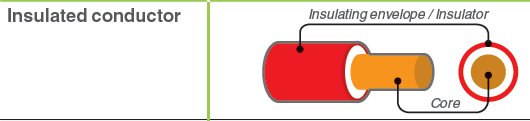
Рис. Schneider Electric
Тематики
- кабели, провода...
EN
FR
покрышка
Защитный изолятор цилиндрической или конической формы с открытыми торцами.
[ ГОСТ 27744-88]EN
hollow insulator
insulator which is open from end to end, with or without sheds, including end fittings
NOTE – A hollow insulator can be made from one or more permanently assembled insulating elements.
[IEV number 471-01-08 ]FR
isolateur creux
isolateur creux, ouvert de part en part, muni ou non d’ailettes, incluant les armatures d’extrémité
NOTE – Un isolateur creux peut être constitué d’un ou plusieurs éléments d’isolateurs assemblés d’une façon permanente
[IEV number 471-01-08 ]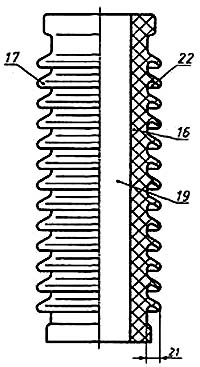
16 - Тело изолятора
17 - Ребро изолятора
19 - Полость изолятора
21 - Вылет ребра изолятора
22 - Капельница ребра изолятораТематики
Обобщающие термины
EN
DE
- Hohlisolator, m
- Überwurf
FR
Франко-русский словарь нормативно-технической терминологии > enveloppe isolante
См. также в других словарях:
without number — ► without number too many to count. Main Entry: ↑number … English terms dictionary
without number — index infinite, myriad, unlimited Burton s Legal Thesaurus. William C. Burton. 2006 … Law dictionary
without number — COUNTLESS, innumerable, unlimited, endless, limitless, untold, numberless, uncountable, uncounted; numerous, many, multiple, manifold, legion. → number * * * without number Too many to be counted ● number * * * without/ … Useful english dictionary
without\ number — • beyond measure • beyond number • without number adj or adv. phr. formal So much that it can not be measured or figured without any limits. With her parents reunited and present at her graduation, she had happiness beyond measure. No one envied… … Словарь американских идиом
without number — the nights I ve worried about those kids is without number Syn: countless, innumerable, unlimited, endless, limitless, untold, numberless, uncountable, uncounted; numerous, many, multiple, manifold, legion … Thesaurus of popular words
without number — See: BEYOND NUMBER … Dictionary of American idioms
without number — See: BEYOND NUMBER … Dictionary of American idioms
without number — too many to count. → number … English new terms dictionary
without number — idi of unknown or countless number; vast … From formal English to slang
without number — innumerably, in a way that cannot be counted … English contemporary dictionary
number — ► NOUN 1) a quantity or value expressed by a word, symbol, or figure. 2) a quantity or amount of something countable. 3) (a number of) several. 4) a single issue of a magazine. 5) a song, dance, or other musical item. 6) informal an item of… … English terms dictionary
